


In the ever - evolving automotive industry, lightweighting has emerged as a crucial strategy to enhance fuel efficiency, reduce emissions, and improve overall vehicle performance. One of the key areas where lightweight materials play a significant role is in car cooling systems. Among the various materials available, aluminum has become the material of choice for many lightweight car cooling applications. As a leading supplier of Lightweight Car Cooling solutions, I'd like to delve into the numerous advantages of using aluminum in this field.
High Thermal Conductivity
Aluminum boasts excellent thermal conductivity, which is a fundamental property for efficient heat transfer in car cooling systems. Thermal conductivity refers to a material's ability to conduct heat. In the context of car cooling, a high - thermal - conductivity material can quickly absorb heat from the engine or other heat - generating components and dissipate it into the surrounding environment.
Compared to other common metals used in the automotive industry, such as steel, aluminum conducts heat about three times more effectively. This means that an aluminum cooling component can transfer heat away from the engine much faster, helping to maintain optimal operating temperatures. For example, an Lightweight Automotive Controller Water Cooling Plate made of aluminum can rapidly cool down the electronic control units in a car, preventing overheating and potential malfunctions.
Low Density
One of the most significant advantages of aluminum is its low density. Aluminum is approximately one - third the weight of steel. In the automotive industry, where every pound saved can translate into improved fuel efficiency and performance, this property is invaluable.
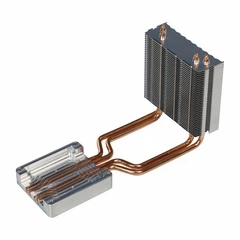
When used in car cooling systems, aluminum components significantly reduce the overall weight of the vehicle. A lighter vehicle requires less energy to move, resulting in lower fuel consumption and reduced emissions. For instance, an Aluminum Heat Pipe Communication Module Heatsink is much lighter than a similar heatsink made of steel, contributing to the overall weight reduction of the car's communication module and the vehicle as a whole.
Corrosion Resistance
Aluminum has a natural oxide layer on its surface that provides excellent corrosion resistance. In car cooling systems, which are often exposed to water, coolant, and various chemicals, corrosion can be a major problem. Corroded cooling components can lead to leaks, reduced heat transfer efficiency, and ultimately, system failure.
The oxide layer on aluminum acts as a protective barrier, preventing the metal from reacting with the surrounding environment. This means that aluminum cooling components have a longer service life and require less maintenance compared to components made of other materials. An Automobile Car Drainage Raditor made of aluminum can withstand the harsh conditions of the automotive environment, ensuring reliable performance over an extended period.
Formability
Aluminum is highly formable, which means it can be easily shaped into complex geometries. In car cooling systems, where space is often limited and components need to fit precisely into specific areas, this property is crucial.


Manufacturers can use various forming techniques, such as extrusion, casting, and stamping, to create aluminum cooling components with intricate designs. This allows for the optimization of heat transfer surfaces and the integration of multiple functions into a single component. For example, aluminum radiators can be designed with finned structures to increase the surface area for heat dissipation, improving the overall efficiency of the cooling system.
Recyclability
In today's environmentally conscious world, the recyclability of materials is an important consideration. Aluminum is one of the most recyclable materials on the planet. Recycling aluminum requires only about 5% of the energy needed to produce new aluminum from bauxite ore.
When car cooling components reach the end of their service life, the aluminum can be easily recycled and reused to make new components. This not only reduces the environmental impact but also helps to conserve natural resources. As a supplier of lightweight car cooling solutions, we are committed to promoting sustainable practices, and the use of aluminum in our products aligns with this goal.
Cost - Effectiveness
Although the initial cost of aluminum may be slightly higher than some other materials, its long - term cost - effectiveness makes it an attractive option for car cooling systems. The combination of its high thermal conductivity, low density, corrosion resistance, and formability results in a more efficient and reliable cooling system.
Over the life of a vehicle, the savings in fuel costs, maintenance costs, and replacement costs can outweigh the initial investment in aluminum cooling components. Additionally, as the demand for aluminum in the automotive industry increases, economies of scale are driving down the cost of production, making aluminum even more cost - competitive.
Compatibility with Coolants
Aluminum is compatible with a wide range of coolants used in car cooling systems. This compatibility ensures that the cooling system can operate effectively without any chemical reactions between the aluminum and the coolant.
Most modern coolants are formulated to work well with aluminum, providing additional protection against corrosion and enhancing heat transfer. This allows for the use of advanced coolant technologies to further improve the performance of the car cooling system.
Conclusion
In conclusion, the advantages of using aluminum in lightweight car cooling are numerous and significant. Its high thermal conductivity, low density, corrosion resistance, formability, recyclability, cost - effectiveness, and compatibility with coolants make it the ideal material for modern car cooling systems.
As a supplier of Lightweight Car Cooling solutions, we are dedicated to providing high - quality aluminum cooling components that meet the strictest industry standards. Our products, such as the Lightweight Automotive Controller Water Cooling Plate, Aluminum Heat Pipe Communication Module Heatsink, and Automobile Car Drainage Raditor, are designed to optimize the performance of your vehicle's cooling system, improve fuel efficiency, and reduce emissions.
If you are interested in learning more about our lightweight car cooling solutions or would like to discuss a potential procurement, please feel free to reach out. We look forward to the opportunity to work with you and contribute to the success of your automotive projects.
References
- ASM Handbook Committee. (2001). ASM Handbook Volume 2: Properties and Selection: Nonferrous Alloys and Special - Purpose Materials. ASM International.
- Davis, J. R. (Ed.). (2007). Aluminum and Aluminum Alloys. ASM International.
- Heywood, J. B. (1988). Internal Combustion Engine Fundamentals. McGraw - Hill.