


Hey there! As a supplier of All Aluminum Stacked Radiators, I often get asked about how these rads can be connected to other cooling systems. So, I thought I'd write this blog to share some insights on the different connection methods out there.
First off, let's talk about the importance of proper connections. When you're trying to keep your equipment cool, a good connection between your All Aluminum Stacked Radiator and other cooling components is crucial. It ensures efficient heat transfer and keeps your system running smoothly. If the connection isn't right, you can end up with hot spots, reduced cooling performance, and even damage to your equipment.
One of the most common connection methods is using pipes. You can connect your All Aluminum Stacked Radiator to a water - based cooling system using pipes. This is a popular choice because water is a great coolant. It has a high heat capacity, which means it can absorb a lot of heat from your radiator and carry it away.
To make this connection, you'll need to use pipes that are compatible with both the radiator and the rest of the cooling system. Usually, copper or aluminum pipes are a good option as they're both good conductors of heat. You'll also need to use appropriate fittings to ensure a leak - free connection. These fittings can be brass, copper, or plastic, depending on your specific requirements.
When it comes to connecting the pipes, there are a few things to keep in mind. First, make sure the pipes are the right size. If they're too small, the coolant flow will be restricted, and your cooling efficiency will suffer. If they're too large, you might end up with inefficient circulation. You'll also want to make sure the pipes are properly sealed. You can use gaskets or sealants to prevent any leaks.
Another option for connection is using a direct - contact method. In some cases, you might want to connect your All Aluminum Stacked Radiator directly to another cooling component, like a Combination Water Cooling Radiator. This can be done by using thermal pads or thermal paste.


Thermal pads are pre - cut sheets of a material that has good thermal conductivity. You place the pad between the radiator and the other component, and it helps to transfer heat between them. Thermal paste, on the other hand, is a viscous substance that you apply in a thin layer. It fills in any microscopic gaps between the two surfaces, improving heat transfer.
This direct - contact method is great for applications where space is limited or when you need a very efficient heat transfer. However, it requires careful installation. You need to make sure the surfaces are clean and flat before applying the thermal pad or paste. Any dirt or unevenness can reduce the effectiveness of the heat transfer.
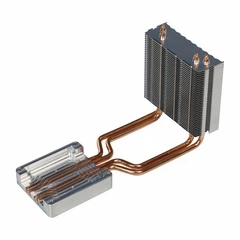
If you're looking for a more advanced connection method, you might consider using a heat pipe. Heat pipes are sealed tubes that contain a small amount of liquid. The liquid evaporates at the hot end of the pipe, absorbs heat from the radiator, and then condenses at the cold end, releasing the heat.
Heat pipes can be very effective at transferring heat over longer distances. They're often used in high - performance cooling systems, where you need to move heat from a hot component to a radiator that's located some distance away. You can connect the heat pipes to your All Aluminum Stacked Radiator using special connectors or by soldering them in place.
But heat pipes also have their limitations. They can be more expensive than other connection methods, and they require careful design and installation. You need to make sure the heat pipes are properly sized and oriented to ensure efficient heat transfer.
Now, let's talk about connecting to an air - based cooling system. You can connect your All Aluminum Stacked Radiator to a fan or a blower to increase the airflow over the radiator. This helps to dissipate heat more effectively.
You can use brackets or mounts to attach the fan or blower to the radiator. Make sure the fan is the right size and has the appropriate airflow capacity for your radiator. A fan that's too small won't provide enough airflow, while a fan that's too large might be noisy and consume more power than necessary.
In some cases, you might also want to connect your radiator to an Aluminum Finned Heat Sink. The fins on the heat sink increase the surface area for heat dissipation, which can improve the overall cooling performance. You can connect the heat sink to the radiator using thermal paste or by mechanical means, like screws or clips.
Another interesting connection option is using a DCC Power Control Stacked Dual - Sided Heatsink. This type of heatsink can be connected to your All Aluminum Stacked Radiator to provide additional cooling capacity. It's designed to handle high - power applications and can be a great addition to your cooling system.
When connecting to a DCC Power Control Stacked Dual - Sided Heatsink, you'll need to follow the manufacturer's instructions carefully. Make sure the electrical connections are secure and that the heat transfer between the radiator and the heatsink is optimized.
In conclusion, there are several connection methods for an All Aluminum Stacked Radiator to other cooling systems. Whether you're using pipes, direct - contact methods, heat pipes, or connecting to fans and heat sinks, each method has its pros and cons. You need to choose the method that best suits your specific application, taking into account factors like space, cooling requirements, and budget.
If you're interested in purchasing All Aluminum Stacked Radiators or have any questions about the connection methods, feel free to reach out. We're here to help you find the best solution for your cooling needs.
References
- Common Plumbing Materials for Cooling Systems. Some General Knowledge from Industry Publications.
- Advanced Thermal Management Techniques and Component Connection in Cooling Systems, A Collection of Research Papers.
- Manufacturer's Guides for All Aluminum Stacked Radiators and Related Cooling Components.