


Vacuum tunnel brazing is a highly specialized and efficient manufacturing process that has found extensive applications across various industries. As a leading supplier of tunnel brazing processes, I am excited to delve into the diverse applications of this advanced technology and highlight its significance in modern manufacturing.
Aerospace Industry
In the aerospace industry, the demand for lightweight yet strong components is paramount. Vacuum tunnel brazing offers a solution to join dissimilar materials, such as aluminum and titanium, with high precision and reliability. This process is used to manufacture critical components like heat exchangers, hydraulic manifolds, and structural parts.
Heat exchangers play a crucial role in maintaining the temperature of aircraft systems, including engines and avionics. Vacuum tunnel brazing ensures a hermetic seal between the tubes and fins of the heat exchanger, preventing leakage and maximizing heat transfer efficiency. The ability to braze complex geometries and thin-walled structures makes this process ideal for aerospace applications where weight reduction is a key design consideration.
Hydraulic manifolds are used to distribute hydraulic fluid throughout the aircraft's control systems. Vacuum tunnel brazing provides a strong and leak-free joint between the manifold's ports and passages, ensuring reliable operation under high pressure and extreme conditions. The process also eliminates the need for additional sealing materials, reducing the overall weight of the component.
Automotive Industry
The automotive industry is another major beneficiary of vacuum tunnel brazing technology. This process is widely used in the manufacturing of automotive radiators, heat exchangers, and cooling plates.
Automotive radiators are responsible for dissipating heat from the engine coolant, ensuring optimal engine performance. Vacuum tunnel brazing is used to join the aluminum tubes and fins of the radiator, creating a strong and durable bond. The process also allows for the production of radiators with complex geometries, such as multi-pass designs, which improve heat transfer efficiency. Automobile Car Drainage Raditor is an example of a product that can be manufactured using vacuum tunnel brazing.
Heat exchangers are used in various automotive systems, including air conditioning, transmission cooling, and exhaust gas recirculation. Vacuum tunnel brazing enables the production of compact and efficient heat exchangers with high heat transfer coefficients. The process also ensures a reliable joint between the tubes and headers, preventing leakage and improving the overall performance of the heat exchanger.
Lightweight automotive controller water cooling plates are essential for maintaining the temperature of electronic control units (ECUs) in modern vehicles. Vacuum tunnel brazing is used to join the aluminum base plate and the cooling channels, creating a high-performance cooling solution. The process allows for the production of cooling plates with complex geometries and thin-walled structures, which are lightweight and efficient. Lightweight Automotive Controller Water Cooling Plate is a product that benefits from vacuum tunnel brazing technology.
Electronics Industry
In the electronics industry, the demand for high-performance heat dissipation solutions is increasing due to the miniaturization of electronic components and the increasing power density of electronic devices. Vacuum tunnel brazing is used to manufacture heat sinks, heat pipes, and thermal modules for electronic applications.
Heat sinks are used to dissipate heat from electronic components, such as microprocessors, graphics cards, and power amplifiers. Vacuum tunnel brazing enables the production of heat sinks with high thermal conductivity and large surface areas, which improve heat transfer efficiency. The process also allows for the integration of heat pipes and other advanced cooling technologies into the heat sink design, further enhancing its performance.
Heat pipes are highly efficient heat transfer devices that are used in a wide range of electronic applications, including laptops, servers, and LED lighting. Vacuum tunnel brazing is used to join the heat pipe's evaporator and condenser sections, ensuring a reliable and efficient heat transfer path. The process also allows for the production of heat pipes with complex geometries and small diameters, which are suitable for use in compact electronic devices.
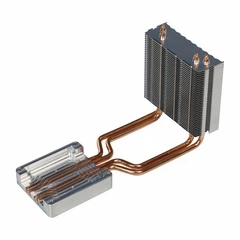
Aluminum heat pipe communication module heatsinks are used to dissipate heat from communication modules, such as 5G base stations and routers. Vacuum tunnel brazing is used to join the heat pipe and the aluminum fin array, creating a high-performance cooling solution. The process ensures a strong and reliable bond between the heat pipe and the fin array, which improves heat transfer efficiency and reduces the temperature of the communication module. Aluminum Heat Pipe Communication Module Heatsink is an example of a product that can be manufactured using vacuum tunnel brazing.
Energy Industry
The energy industry is also increasingly using vacuum tunnel brazing technology in the manufacturing of various components, such as solar panels, fuel cells, and heat exchangers for power plants.
Solar panels are used to convert sunlight into electricity. Vacuum tunnel brazing is used to join the solar cells and the interconnects, ensuring a reliable electrical connection and maximizing the efficiency of the solar panel. The process also allows for the production of solar panels with high durability and resistance to environmental factors, such as moisture and corrosion.
Fuel cells are electrochemical devices that convert chemical energy into electrical energy. Vacuum tunnel brazing is used to join the fuel cell's bipolar plates and other components, creating a hermetic seal and ensuring efficient operation. The process also allows for the production of fuel cells with high power density and long service life.
Heat exchangers are used in power plants to transfer heat between different fluids, such as water and steam. Vacuum tunnel brazing is used to manufacture heat exchangers with high efficiency and reliability, ensuring optimal performance of the power plant. The process also allows for the production of heat exchangers with complex geometries and large surface areas, which improve heat transfer efficiency.
Medical Industry
In the medical industry, vacuum tunnel brazing is used to manufacture various components, such as surgical instruments, dental implants, and medical devices.
Surgical instruments require high precision and reliability to ensure safe and effective surgical procedures. Vacuum tunnel brazing is used to join the different parts of the surgical instrument, creating a strong and durable bond. The process also allows for the production of surgical instruments with complex geometries and fine details, which are essential for minimally invasive surgery.


Dental implants are used to replace missing teeth and restore oral function. Vacuum tunnel brazing is used to join the dental implant's abutment and the crown, ensuring a secure and stable connection. The process also allows for the production of dental implants with high biocompatibility and corrosion resistance, which are essential for long-term success.
Medical devices, such as pacemakers and defibrillators, require high reliability and performance to ensure the safety and well-being of patients. Vacuum tunnel brazing is used to manufacture the components of these medical devices, such as the battery casing and the electrical connectors. The process ensures a hermetic seal and a reliable electrical connection, which are essential for the proper functioning of the medical device.
Conclusion
Vacuum tunnel brazing is a versatile and efficient manufacturing process that has found extensive applications across various industries. As a supplier of tunnel brazing processes, we are committed to providing our customers with high-quality products and services. Our advanced technology and expertise allow us to meet the most demanding requirements of our customers and deliver innovative solutions that improve the performance and reliability of their products.
If you are interested in learning more about our vacuum tunnel brazing services or would like to discuss your specific requirements, please feel free to contact us. We look forward to the opportunity to work with you and help you achieve your manufacturing goals.
References
- "Brazing and Soldering Handbook" by James F. Lancaster
- "Vacuum Brazing Technology" by John H. Westbrook
- "Advanced Brazing Techniques for Aerospace Applications" by David A. Green
- "Automotive Heat Exchanger Design and Manufacturing" by John M. Coulson
- "Electronics Cooling Handbook" by Reinhard Radermacher