


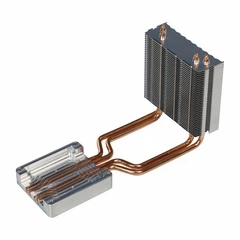
In the field of thermal management, cavity water cooling plates have emerged as a crucial solution for dissipating heat efficiently. As a dedicated cavity water cooling plate supplier, I've witnessed firsthand the growing demand for enhanced heat transfer rates in various applications. This blog post aims to share some insights and strategies on how to improve the heat transfer rate of a cavity water cooling plate.
Understanding the Basics of Heat Transfer in Cavity Water Cooling Plates
Before delving into the methods of improving heat transfer, it's essential to understand the basic principles at play. Heat transfer in a cavity water cooling plate primarily occurs through three mechanisms: conduction, convection, and radiation. Conduction is the transfer of heat through a solid material, such as the metal of the cooling plate. Convection involves the transfer of heat by the movement of a fluid, in this case, water flowing through the cavities of the plate. Radiation is the emission of energy in the form of electromagnetic waves.
In a cavity water cooling plate, conduction occurs as heat is transferred from the heat source (e.g., a battery or electronic component) to the surface of the plate. The water flowing through the cavities then absorbs this heat through convection, carrying it away from the source. By optimizing these heat transfer mechanisms, we can significantly improve the overall efficiency of the cooling plate.
Material Selection
The choice of material for the cavity water cooling plate is crucial in determining its heat transfer performance. Metals with high thermal conductivity, such as aluminum and copper, are commonly used due to their ability to quickly conduct heat away from the source. Aluminum, in particular, is a popular choice because of its lightweight, corrosion resistance, and relatively low cost.
For example, our Cavity-type Energy Storage Battery Water Cooling Plate is made from high-quality aluminum alloy, which provides excellent thermal conductivity and mechanical strength. The material's ability to quickly transfer heat from the battery to the water flowing through the cavities ensures efficient cooling and helps to extend the battery's lifespan.
Design Optimization
The design of the cavity water cooling plate also plays a significant role in heat transfer efficiency. Several factors need to be considered, including the shape and size of the cavities, the flow path of the water, and the surface area available for heat transfer.
- Cavity Shape and Size: The shape and size of the cavities can affect the flow pattern of the water and the contact area between the water and the plate. Optimizing the cavity design can enhance convection by promoting turbulent flow, which increases the mixing of the water and improves heat transfer. For instance, using rectangular or triangular cavities instead of circular ones can create more turbulence and improve the overall heat transfer coefficient.
- Flow Path Design: The flow path of the water through the cavities should be carefully designed to ensure uniform distribution and minimize pressure drop. A well-designed flow path can prevent hot spots and ensure that all areas of the plate are effectively cooled. For example, a serpentine flow path can increase the contact time between the water and the plate, allowing for more efficient heat transfer.
- Surface Area Enhancement: Increasing the surface area of the plate in contact with the water can significantly improve heat transfer. This can be achieved through various methods, such as adding fins or microchannels to the surface of the plate. Our Aluminum Heat Pipe Communication Module Heatsink utilizes a finned design to increase the surface area and enhance heat dissipation.
Fluid Properties and Flow Rate
The properties of the cooling fluid, such as its thermal conductivity, specific heat capacity, and viscosity, can also affect heat transfer. Water is commonly used as a cooling fluid due to its high thermal conductivity and specific heat capacity. However, additives can be used to further enhance its properties, such as anti-freeze agents for use in low-temperature environments or corrosion inhibitors to protect the plate.
The flow rate of the water through the cavities is another critical factor. A higher flow rate can increase the convective heat transfer coefficient, but it also requires more pumping power. Finding the optimal flow rate is essential to balance heat transfer efficiency and energy consumption. By carefully controlling the flow rate, we can ensure that the cooling plate operates at its maximum efficiency.
Maintenance and Monitoring
Regular maintenance and monitoring of the cavity water cooling plate are essential to ensure its long-term performance. Over time, the plate may accumulate dirt, debris, or scale, which can reduce its heat transfer efficiency. Cleaning the plate periodically and checking for any signs of damage or leakage can help to maintain its performance.
Monitoring the temperature and pressure of the cooling system can also provide valuable insights into its operation. By detecting any abnormal changes in these parameters, we can identify potential issues early and take corrective action before they cause significant problems.
Applications and Case Studies
Cavity water cooling plates are widely used in various industries, including automotive, energy storage, and electronics. Here are some examples of how our products have been used to improve heat transfer and solve thermal management challenges:
- Automotive Industry: In the automotive industry, cavity water cooling plates are used to cool batteries, electric motors, and power electronics. Our Automobile Car Drainage Raditor is designed to efficiently dissipate heat from the engine and other components, ensuring reliable performance and reducing the risk of overheating.
- Energy Storage Systems: Energy storage systems, such as lithium-ion batteries, generate a significant amount of heat during charging and discharging. Cavity water cooling plates are used to maintain the battery temperature within a safe operating range, improving battery performance and lifespan. Our cavity-type energy storage battery water cooling plates have been successfully applied in large-scale energy storage projects, providing efficient and reliable cooling solutions.
- Electronics Industry: In the electronics industry, cavity water cooling plates are used to cool high-power electronic components, such as CPUs and GPUs. By effectively dissipating heat, these plates help to prevent overheating and ensure the stable operation of electronic devices.
Conclusion
Improving the heat transfer rate of a cavity water cooling plate requires a comprehensive approach that considers material selection, design optimization, fluid properties, and maintenance. By implementing these strategies, we can enhance the efficiency of the cooling plate and provide effective thermal management solutions for various applications.


As a leading cavity water cooling plate supplier, we are committed to providing high-quality products and innovative solutions to meet the evolving needs of our customers. If you are interested in learning more about our products or discussing your specific thermal management requirements, please feel free to contact us for a detailed consultation and procurement discussion.
References
- Incropera, F. P., & DeWitt, D. P. (2002). Fundamentals of Heat and Mass Transfer. Wiley.
- Bergman, T. L., Lavine, A. S., Incropera, F. P., & DeWitt, D. P. (2011). Introduction to Heat Transfer. Wiley.
- Kakaç, S., & Pramuanjaroenkij, A. (2005). Heat Exchangers: Selection, Rating, and Thermal Design. CRC Press.