


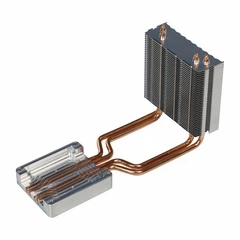
As a supplier of Heat Pipe Aluminum Heat Sinks, I've witnessed firsthand the critical role that heat pipes play in the overall performance of heat sinks. The internal structure of a heat pipe is a key factor that determines its heat transfer efficiency, reliability, and suitability for various applications. In this blog post, I'll delve into how the internal structure of a heat pipe affects its performance in a heat sink.
1. Basic Components of a Heat Pipe's Internal Structure
A heat pipe consists of three main internal components: the shell, the wick structure, and the working fluid. Each of these components has a distinct function and significantly impacts the heat pipe's performance.
The shell serves as the outer container of the heat pipe, providing mechanical support and preventing the leakage of the working fluid. It is typically made of materials with high thermal conductivity, such as copper or aluminum. The choice of shell material affects the heat transfer rate between the heat source and the working fluid. For example, copper has a higher thermal conductivity than aluminum, which means that a copper - shelled heat pipe can transfer heat more efficiently from the heat source to the working fluid.
The wick structure is a capillary - porous material that lines the inner wall of the heat pipe. Its primary function is to transport the condensed working fluid from the condenser section back to the evaporator section. There are several types of wick structures, including sintered powder wicks, groove wicks, and fiber wicks. Each type has its own advantages and disadvantages in terms of capillary force, permeability, and manufacturing complexity.
The working fluid is the medium that transfers heat within the heat pipe. It undergoes a phase change from liquid to vapor in the evaporator section when it absorbs heat from the heat source, and then from vapor to liquid in the condenser section when it releases heat to the surrounding environment. The choice of working fluid depends on the operating temperature range of the heat pipe. For low - temperature applications, working fluids such as ammonia or methanol are commonly used, while for high - temperature applications, water or sodium may be more suitable.
2. Impact of Wick Structure on Heat Pipe Performance
The wick structure has a profound impact on the heat pipe's performance, especially in terms of its heat transfer limit and capillary pumping ability.
Capillary Force
The capillary force generated by the wick structure is crucial for the return of the condensed working fluid to the evaporator section. A higher capillary force allows the heat pipe to operate against gravity or in adverse orientations. Sintered powder wicks, for example, have a high capillary force due to their fine - pore structure. This makes them suitable for applications where the heat pipe needs to work in a vertical orientation with the evaporator at the bottom. On the other hand, groove wicks have a relatively lower capillary force but higher permeability, which means that they can transport the working fluid more quickly.
Heat Transfer Limit
The heat transfer limit of a heat pipe is determined by several factors, including the capillary limit, the boiling limit, and the sonic limit. The capillary limit is related to the ability of the wick structure to transport the condensed working fluid back to the evaporator section. If the heat load exceeds the capillary limit, the wick will dry out in the evaporator section, leading to a significant reduction in heat transfer efficiency. A well - designed wick structure can increase the capillary limit of the heat pipe. For instance, a sintered powder wick with a uniform pore size distribution can provide a more stable capillary force, which helps to prevent the dry - out phenomenon.
Permeability
Permeability refers to the ease with which the working fluid can flow through the wick structure. A wick with high permeability allows the working fluid to move more freely, reducing the pressure drop within the heat pipe. Groove wicks, for example, have high permeability because the grooves provide a relatively open path for the working fluid to flow. This high permeability enables groove - wick heat pipes to achieve high heat transfer rates, especially in applications where a large amount of working fluid needs to be transported.
3. Influence of Working Fluid on Heat Pipe Performance
The choice of working fluid can significantly affect the heat pipe's performance, particularly in terms of its heat transfer capacity and operating temperature range.
Heat Transfer Capacity
The heat transfer capacity of a heat pipe is directly related to the latent heat of vaporization of the working fluid. A working fluid with a high latent heat of vaporization can absorb and release more heat during the phase - change process. For example, water has a relatively high latent heat of vaporization compared to other common working fluids, which makes it an excellent choice for heat pipes operating in the temperature range of 50 - 200°C.
Operating Temperature Range
The operating temperature range of a heat pipe is determined by the saturation temperature of the working fluid. Different working fluids have different saturation temperature ranges. For example, ammonia has a low saturation temperature, which makes it suitable for low - temperature applications such as refrigeration systems. In contrast, sodium has a very high saturation temperature, which allows it to be used in high - temperature applications such as nuclear reactors.
4. Real - World Applications and the Role of Heat Pipe Internal Structure
In various real - world applications, the internal structure of the heat pipe plays a crucial role in ensuring the optimal performance of the heat sink.
Electronics Cooling
In the electronics industry, heat pipes are widely used to cool high - power components such as CPUs and GPUs. The high heat transfer efficiency of heat pipes is essential for maintaining the temperature of these components within a safe operating range. For example, in a laptop computer, a heat pipe with a sintered powder wick and water as the working fluid can effectively transfer heat from the CPU to the heat sink, preventing overheating and ensuring the stable operation of the computer.


Automotive Applications
In the automotive industry, heat pipes are used in various applications, including Automotive Controller Water Cooling Plate, Cavity - type Energy Storage Battery Water Cooling Plate, and Automobile Car Drainage Raditor. The internal structure of the heat pipe needs to be carefully designed to meet the specific requirements of these applications. For example, in an automotive controller water - cooling plate, the heat pipe may need to operate in a relatively high - temperature environment and against gravity. A heat pipe with a high - performance wick structure and a suitable working fluid can ensure efficient heat transfer and reliable operation.
5. Conclusion and Invitation for Purchase
In conclusion, the internal structure of a heat pipe, including the shell, wick structure, and working fluid, has a significant impact on its performance in a heat sink. By carefully selecting the materials and design of these components, we can optimize the heat transfer efficiency, heat transfer limit, and operating temperature range of the heat pipe.
As a professional Heat Pipe Aluminum Heat Sink supplier, we have extensive experience in designing and manufacturing heat pipes with different internal structures to meet the diverse needs of our customers. Whether you are in the electronics industry, automotive industry, or any other field that requires efficient heat dissipation solutions, we can provide you with high - quality heat pipes and heat sinks.
If you are interested in our products or have any questions about heat pipe technology, please feel free to contact us for further discussion and procurement negotiation. We look forward to working with you to solve your heat dissipation problems.
References
- Faghri, A. (1995). Heat Pipe Science and Technology. Taylor & Francis.
- Cotter, T. P. (1965). Principles and prospects of heat pipes. In Proceedings of the 1st International Heat Pipe Conference.
- Peterson, G. P. (1994). An Introduction to Heat Pipes: Modeling, Testing, and Applications. Wiley - Interscience.