


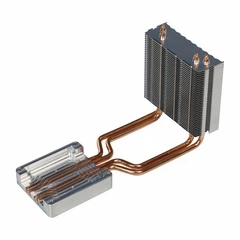
Hey there, fellow car enthusiasts! As a supplier of automotive cooling systems, I've been in the thick of it, dealing with all sorts of cooling solutions day in and day out. Today, I'm gonna break down for you how an air-cooled automotive cooling system works. It's a pretty cool topic, pun intended!
First off, let's talk about why we even need a cooling system in the first place. When your car's engine is running, it generates a whole lot of heat. If this heat isn't managed properly, it can cause all sorts of problems, like engine overheating, which can lead to serious damage and costly repairs. That's where the cooling system steps in to keep everything at a safe temperature.
So, what exactly is an air-cooled automotive cooling system? Well, unlike its water-cooled counterpart, which uses a liquid coolant to absorb and transfer heat, an air-cooled system relies on air to do the job. It's a simpler setup in many ways, and it has its own set of advantages and disadvantages.
Let's start with the basics. The heart of an air-cooled system is the engine itself, or more specifically, the engine's cylinder heads and cylinders. These parts are designed with fins on their outer surfaces. These fins serve a crucial purpose: they increase the surface area of the engine components that are exposed to the air. The more surface area there is, the more efficiently heat can be transferred from the engine to the surrounding air.


As the engine runs, it creates a lot of heat. This heat is conducted from the inside of the engine to the fins on the outside. At the same time, a fan or a series of fans is used to blow air over the fins. The moving air carries away the heat, cooling the engine down. It's a pretty straightforward process, but it requires a well-designed system to work effectively.
One of the key components in an air-cooled system is the fan. The fan is responsible for creating a flow of air over the engine's fins. There are different types of fans used in air-cooled systems. Some are driven directly by the engine's crankshaft, while others are electric and are controlled by the car's computer system. The size and power of the fan depend on the size and power of the engine. A larger engine will typically require a more powerful fan to ensure adequate cooling.
Another important aspect of an air-cooled system is the ducting. Ducts are used to direct the air flow to the areas of the engine that need it most. They help to ensure that the air is distributed evenly over the fins, maximizing the cooling efficiency. The design of the ducting is crucial, as it can have a significant impact on the overall performance of the cooling system.
Now, let's talk about some of the advantages of an air-cooled system. One of the biggest advantages is its simplicity. Since there's no need for a complex network of hoses, pumps, and radiators like in a water-cooled system, an air-cooled system is generally easier to maintain and repair. It also weighs less, which can improve the car's fuel efficiency and handling.
However, air-cooled systems also have their drawbacks. One of the main disadvantages is that they are less efficient at cooling than water-cooled systems, especially in hot weather or under heavy load. This is because air has a lower heat capacity than water, which means it can't absorb as much heat per unit volume. As a result, air-cooled engines tend to run hotter than water-cooled engines, which can lead to increased wear and tear over time.
Another issue with air-cooled systems is that they can be noisy. The fans used in these systems can generate a lot of noise, especially at high speeds. This can be a nuisance for some drivers, especially those who are used to the quieter operation of water-cooled engines.
Despite these drawbacks, air-cooled systems still have their place in the automotive world. They are commonly used in small engines, such as those found in motorcycles, lawnmowers, and some older cars. They are also popular in racing applications, where the simplicity and lightweight design of the system can provide a competitive advantage.
At our company, we offer a range of products that are designed to work with air-cooled automotive cooling systems. For example, we have the Automotive Controller Water Cooling Plate, which can help to improve the cooling efficiency of the engine's control unit. We also have the Aluminum Heat Pipe Communication Module Heatsink, which is designed to keep the communication module in the car cool. And if you're looking for a lightweight solution, our Lightweight Automotive Controller Water Cooling Plate is a great option.
If you're in the market for an automotive cooling system or any of our related products, we'd love to hear from you. Whether you're a car manufacturer, a mechanic, or just a DIY enthusiast, we have the expertise and the products to meet your needs. Contact us today to start a conversation about how we can help you keep your engine cool and running smoothly.
In conclusion, an air-cooled automotive cooling system is a simple and effective way to keep an engine at a safe temperature. While it has its limitations, it also offers some unique advantages that make it a popular choice in certain applications. By understanding how these systems work and the products available to support them, you can make an informed decision about the best cooling solution for your vehicle.
References
- Automotive Engineering Handbook, various editions
- SAE International publications on automotive cooling systems
- Online automotive forums and enthusiast communities