


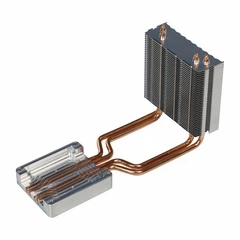
As a supplier of Aluminum Finned Heat Sinks, ensuring the proper alignment of our heat sinks with the heat source is of utmost importance. A well - aligned heat sink can significantly enhance heat transfer efficiency, prolong the lifespan of the heat - generating components, and improve the overall performance of the system. In this blog, I will share some key methods and considerations to guarantee the proper alignment of an aluminum finned heat sink with the heat source.
Understanding the Basics of Heat Transfer and Alignment
Before delving into the alignment methods, it's essential to understand the principles of heat transfer. Heat is transferred from the heat source to the heat sink through conduction, and then dissipated into the surrounding environment via convection and radiation. The effectiveness of conduction, which is the initial and crucial step, depends largely on the quality of the contact between the heat sink and the heat source.
Proper alignment means that the base of the aluminum finned heat sink makes full and even contact with the surface of the heat source. Any gaps or uneven contact can lead to increased thermal resistance, reducing the heat transfer rate. For example, if there are air pockets between the heat sink base and the heat source, air, being a poor conductor of heat, will act as an insulator and impede the flow of heat.
Precise Measurement and Design
The first step in ensuring proper alignment is accurate measurement of the heat source. We need to know the exact dimensions, shape, and surface flatness of the heat - generating component. This information is then used in the design process of the aluminum finned heat sink.
Our engineering team uses advanced measurement tools such as calipers, micrometers, and 3D scanners to obtain precise data. Based on these measurements, we design the heat sink base to match the heat source perfectly. For instance, if the heat source has a rectangular shape with specific length and width, we ensure that the heat sink base has the same dimensions with a tolerance of just a few micrometers.
In addition to the size, we also consider the surface features of the heat source. Some heat sources may have raised areas or specific mounting points. Our heat sink design takes these factors into account to ensure a seamless fit. For example, if there are mounting holes on the heat source, we design corresponding holes on the heat sink base for secure attachment.
Surface Preparation
Both the heat sink base and the surface of the heat source need to be properly prepared before alignment. A smooth and clean surface is essential for good thermal contact.
We use precision machining techniques to ensure the heat sink base has a high - quality finish. The base is ground and polished to achieve a flatness within a very tight tolerance. This smooth surface reduces the contact resistance between the heat sink and the heat source.


Similarly, the heat source surface should also be cleaned to remove any dirt, dust, or oxidation. Oxidation layers on the heat source surface can increase thermal resistance, so we recommend using appropriate cleaning agents and techniques to remove them. For example, a mild solvent can be used to clean the surface, followed by a dry - wipe to ensure no residue remains.
Thermal Interface Materials (TIMs)
Thermal interface materials play a vital role in ensuring proper alignment and improving heat transfer. TIMs fill in the microscopic gaps and irregularities between the heat sink base and the heat source surface, reducing the thermal resistance.
There are different types of TIMs available, such as thermal greases, phase - change materials, and thermal pads. Thermal greases are popular because they can conform to the surface irregularities easily. They are applied in a thin layer on the heat source surface before mounting the heat sink.
Phase - change materials are solid at room temperature and melt when the temperature rises, filling the gaps more effectively. Thermal pads, on the other hand, are pre - cut sheets that are easy to handle and install. We recommend choosing the appropriate TIM based on the specific application requirements, such as temperature range, durability, and ease of installation.
Mounting and Fixing
Proper mounting and fixing of the aluminum finned heat sink are crucial for maintaining alignment. There are several mounting methods available, each with its own advantages and disadvantages.
One common method is using screws or bolts. We design the heat sink with mounting holes that align with the holes on the heat source. When tightening the screws, it's important to apply an even torque to ensure uniform pressure across the heat sink base. Uneven tightening can cause the heat sink to tilt, resulting in uneven contact with the heat source.
Another method is using clips or clamps. Clips can provide a quick and easy way to mount the heat sink, especially in applications where frequent disassembly may be required. However, we need to ensure that the clips are strong enough to hold the heat sink firmly in place without causing excessive stress on the heat source.
In some cases, we also use adhesives to attach the heat sink to the heat source. Adhesives can provide a more permanent and vibration - resistant connection. However, the choice of adhesive should be carefully considered, as it needs to have good thermal conductivity and be able to withstand the operating temperature of the system.
Quality Control and Testing
After the heat sink is mounted on the heat source, we conduct thorough quality control and testing to ensure proper alignment. We use thermal imaging cameras to detect any hot spots on the heat sink surface. Hot spots can indicate areas of poor contact or high thermal resistance.
We also measure the temperature of the heat source and the heat sink under different operating conditions. If the temperature of the heat source is higher than expected, it may be a sign of improper alignment. In such cases, we disassemble the heat sink, check for any issues, and re - mount it following the proper procedures.
Our Product Range and Their Alignment Features
We offer a wide range of aluminum finned heat sinks, each designed with alignment in mind. For example, our High - Power Efficient Stacked Heat Sink is designed for high - power applications. Its base is precisely machined to ensure a perfect fit with high - power heat sources. The stacked fin design not only provides a large surface area for heat dissipation but also allows for easy alignment during installation.
Our Air - Cooled Laser Module Heatsink is specifically designed for laser modules. The heat sink base is designed to match the shape and size of the laser module, and it has special mounting features to ensure proper alignment and secure attachment.
The DCC Power Control Stacked Dual - Sided Heatsink is used in power control applications. It has a dual - sided design that requires precise alignment with the power control components. Our design and manufacturing processes ensure that the heat sink aligns perfectly with the heat source, providing efficient heat transfer.
Conclusion and Call to Action
Ensuring the proper alignment of an aluminum finned heat sink with the heat source is a multi - step process that involves precise measurement, design, surface preparation, proper mounting, and thorough testing. At our company, we are committed to providing high - quality heat sinks that are designed and manufactured to ensure optimal alignment and heat transfer.
If you are in need of aluminum finned heat sinks for your applications, we invite you to contact us for procurement and further discussions. Our team of experts is ready to assist you in selecting the right heat sink and ensuring its proper installation. We believe that our products and services can meet your specific requirements and help you achieve better thermal management in your systems.
References
- Incropera, F. P., & DeWitt, D. P. (2002). Fundamentals of Heat and Mass Transfer. John Wiley & Sons.
- Bergman, T. L., Lavine, A. S., Incropera, F. P., & DeWitt, D. P. (2011). Introduction to Heat Transfer. John Wiley & Sons.
- Kraus, A. D., Azar, M. S., & Welty, J. R. (2001). Extended Surface Heat Transfer. John Wiley & Sons.