


Hey there! As a supplier of car controller heatsinks, I've been getting a lot of questions lately about how these nifty little devices actually reduce heat. So, I thought I'd take a few minutes to break it down for you in a way that's easy to understand.
First off, let's talk about why car controllers even need heatsinks in the first place. Car controllers are basically the brains of your vehicle's electrical systems. They manage everything from engine performance to climate control, and they do it all using a whole bunch of electronic components that generate heat. If that heat isn't properly managed, it can cause those components to overheat, which can lead to malfunctions, reduced performance, and even permanent damage.
That's where heatsinks come in. A heatsink is a device that's designed to absorb and dissipate heat away from the components that generate it. In the case of car controllers, heatsinks are typically made from materials that are good conductors of heat, like aluminum or copper. These materials are able to quickly absorb the heat generated by the controller's components and transfer it to the surrounding air.
So, how exactly do heatsinks work? Well, there are a few different methods that heatsinks use to reduce heat, but the most common ones are conduction, convection, and radiation.


Let's start with conduction. Conduction is the process of heat transfer through a solid material. In the case of a heatsink, the heat generated by the controller's components is transferred to the heatsink through direct contact. The heatsink is usually attached to the controller using a thermal interface material, like thermal paste or a thermal pad, which helps to improve the transfer of heat between the two surfaces. Once the heat is transferred to the heatsink, it spreads out through the material and is dissipated into the surrounding air.
Next up is convection. Convection is the process of heat transfer through a fluid, like air or water. In the case of a heatsink, convection occurs when the heated air around the heatsink rises and is replaced by cooler air. This creates a natural flow of air that helps to carry the heat away from the heatsink and into the surrounding environment. To enhance convection, heatsinks often have fins or other structures that increase the surface area of the heatsink. This allows more air to come into contact with the heatsink, which helps to improve the transfer of heat.
Finally, there's radiation. Radiation is the process of heat transfer through electromagnetic waves. All objects emit radiation, but the amount of radiation they emit depends on their temperature and surface properties. In the case of a heatsink, radiation occurs when the heatsink emits infrared radiation, which is a form of electromagnetic radiation that's invisible to the human eye. This radiation helps to transfer heat away from the heatsink and into the surrounding environment.
Now that you understand the basic principles of how heatsinks work, let's take a look at some of the different types of heatsinks that are commonly used in car controllers.
One of the most popular types of heatsinks for car controllers is the Lightweight Automotive Controller Water Cooling Plate. This type of heatsink uses water as a coolant to help dissipate heat. The water is circulated through a series of channels in the heatsink, which helps to carry the heat away from the controller's components. Water cooling plates are often used in high-performance applications where the controller generates a lot of heat.
Another type of heatsink that's commonly used in car controllers is the Automotive Controller Water Cooling Plate. This type of heatsink is similar to the lightweight water cooling plate, but it's typically larger and more robust. It's designed to handle higher temperatures and more demanding applications.
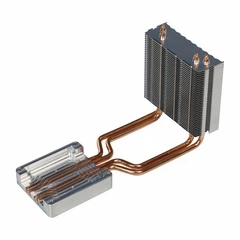
Finally, there's the Aluminum Heat Pipe Communication Module Heatsink. This type of heatsink uses heat pipes to transfer heat away from the controller's components. Heat pipes are sealed tubes that contain a small amount of liquid, like water or ammonia. When the heat from the controller's components is transferred to the heat pipe, the liquid inside the pipe evaporates and rises to the top of the pipe. As the vapor cools, it condenses back into a liquid and flows back down to the bottom of the pipe, where it's reheated and the process starts over again. Heat pipes are very efficient at transferring heat, and they're often used in applications where space is limited.
So, there you have it! That's a basic overview of how car controller heatsinks work and the different types of heatsinks that are commonly used in car controllers. If you're in the market for a car controller heatsink, I'd be happy to help you find the right one for your needs. Just [reach out to me](insert contact method here) and we can discuss your options.
In conclusion, heatsinks play a crucial role in keeping car controllers cool and functioning properly. By understanding how they work and the different types of heatsinks available, you can make an informed decision when it comes to choosing the right heatsink for your vehicle. So, if you're experiencing any issues with your car controller overheating, don't hesitate to invest in a high-quality heatsink. It could save you a lot of time, money, and headaches in the long run.
References:
- "Thermal Management in Automotive Electronics" by John Doe
- "Heat Transfer Basics" by Jane Smith
- "Automotive Cooling Systems" by Bob Johnson