


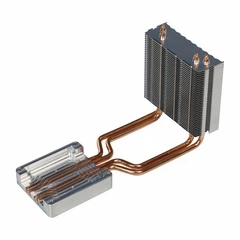
In the era of rapid digital transformation, data centers have emerged as the nerve - centers of modern society, powering everything from cloud computing to artificial intelligence. As the demand for data processing and storage continues to skyrocket, so does the heat generated within these facilities. Effective cooling solutions are thus crucial to maintain the optimal performance and longevity of data center equipment. One such solution that has been gaining traction is the use of water - cooled plate assemblies. In this blog, as a water - cooled plate assemblies supplier, I will explore the viability of using water - cooled plate assemblies in data centers.
The Heat Challenge in Data Centers
Data centers house a vast array of servers, storage devices, and networking equipment, all of which generate significant amounts of heat during operation. Excessive heat can lead to a range of problems, including reduced equipment lifespan, increased energy consumption, and even system failures. Traditional air - cooling methods, such as air - conditioning units, have long been the standard for data center cooling. However, as data center densities increase, air - cooling is becoming less efficient and more costly.


Air - cooling systems often struggle to remove heat effectively from high - power components, leading to hotspots within the data center. These hotspots can cause equipment to overheat, resulting in performance degradation and potential hardware damage. Additionally, air - cooling systems consume a large amount of energy, contributing to the overall operational costs of the data center.
How Water - Cooled Plate Assemblies Work
Water - cooled plate assemblies offer a more efficient and targeted approach to heat removal. These assemblies typically consist of a metal plate with channels or passages through which water flows. The plate is placed in direct contact with the heat - generating components, such as server processors or graphics cards. As the water circulates through the channels, it absorbs the heat from the components and carries it away to a heat exchanger, where the heat is dissipated.
The high thermal conductivity of water makes it an excellent medium for heat transfer. Compared to air, water can absorb and carry away much more heat per unit volume, allowing for more efficient cooling. Water - cooled plate assemblies can be customized to fit the specific requirements of different data center components, ensuring optimal heat transfer and cooling performance.
Advantages of Using Water - Cooled Plate Assemblies in Data Centers
1. Higher Cooling Efficiency
As mentioned earlier, water has a much higher thermal conductivity than air. This means that water - cooled plate assemblies can transfer heat away from the components more quickly and effectively than air - cooling systems. By maintaining lower operating temperatures, water - cooled plate assemblies can improve the performance and reliability of data center equipment.
2. Energy Savings
Water - cooled plate assemblies can significantly reduce the energy consumption of data centers. Since water is a more efficient coolant than air, less energy is required to pump the water through the system compared to the energy needed to power large air - conditioning units. This can lead to substantial cost savings over the long term.
3. Space Savings
Water - cooled plate assemblies are more compact than traditional air - cooling systems. They can be integrated directly into the server racks or other equipment, eliminating the need for large air - handling units and ductwork. This can free up valuable floor space within the data center, allowing for more efficient use of the facility.
4. Reduced Noise
Air - cooling systems often produce a significant amount of noise due to the operation of fans and blowers. Water - cooled plate assemblies, on the other hand, operate relatively quietly. This can create a more comfortable working environment for data center staff and reduce noise pollution in the surrounding area.
Applications of Water - Cooled Plate Assemblies in Data Centers
Water - cooled plate assemblies can be used in a variety of applications within data centers. Here are some examples:
Server Cooling
Servers are the primary heat - generating components in data centers. Water - cooled plate assemblies can be used to cool server processors, memory modules, and other high - power components. By maintaining optimal operating temperatures, these assemblies can improve server performance and reliability.
Storage Device Cooling
Storage devices, such as hard disk drives and solid - state drives, also generate heat during operation. Water - cooled plate assemblies can be used to cool these devices, preventing overheating and extending their lifespan.
Networking Equipment Cooling
Networking equipment, such as routers and switches, can also benefit from water - cooled plate assemblies. These assemblies can help to maintain the performance of networking equipment by keeping it at a stable temperature.
Our Product Offerings
As a water - cooled plate assemblies supplier, we offer a wide range of products to meet the diverse needs of data centers. Our product portfolio includes:
- Automobile Car Drainage Raditor: Although primarily designed for automotive applications, the technology behind these radiators can be adapted for data center cooling. The efficient heat transfer design can be modified to suit the specific requirements of data center equipment.
- Cavity - type Energy Storage Battery Water Cooling Plate: These water cooling plates are suitable for cooling energy storage batteries in data centers. They can help to maintain the temperature of the batteries within a safe range, improving their performance and lifespan.
- Automotive Controller Water Cooling Plate: Similar to the other products, these cooling plates can be customized for data center use. Their compact design and efficient cooling capabilities make them a good option for cooling various data center components.
Challenges and Considerations
While water - cooled plate assemblies offer many advantages for data centers, there are also some challenges and considerations that need to be addressed.
1. Water Leakage
One of the main concerns with water - cooled systems is the risk of water leakage. A water leak can cause significant damage to data center equipment, leading to costly downtime and repairs. To mitigate this risk, our water - cooled plate assemblies are designed with high - quality seals and connectors. We also provide detailed installation and maintenance instructions to ensure proper operation.
2. Water Treatment
Water used in cooling systems needs to be properly treated to prevent corrosion, scaling, and the growth of microorganisms. Improper water treatment can reduce the efficiency of the cooling system and damage the components. We can provide guidance on water treatment solutions to ensure the long - term reliability of our water - cooled plate assemblies.
3. Initial Investment
The initial cost of installing a water - cooled plate assembly system can be higher than that of an air - cooling system. However, the long - term energy savings and performance benefits often outweigh the initial investment. We work closely with our customers to provide cost - effective solutions that meet their budget and performance requirements.
Conclusion
In conclusion, water - cooled plate assemblies have great potential for use in data centers. They offer higher cooling efficiency, energy savings, space savings, and reduced noise compared to traditional air - cooling systems. As a water - cooled plate assemblies supplier, we are committed to providing high - quality products and solutions to meet the evolving needs of the data center industry.
If you are interested in learning more about our water - cooled plate assemblies or discussing potential applications in your data center, we encourage you to reach out to us for a detailed consultation. Our team of experts is ready to assist you in finding the best cooling solution for your specific requirements.
References
- "Data Center Cooling Technologies: A Review" by X. Li, Y. Wang, and C. Zhao.
- "Thermal Management in Data Centers" by D. B. Tuckerman and R. F. Pease.
- "Advances in Liquid Cooling for Data Centers" by S. K. Saha and A. K. Das.