


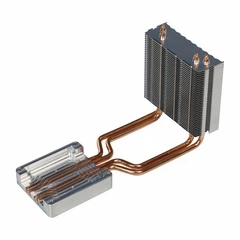
As a supplier of heat pipe aluminum heat sinks, I often encounter inquiries about the applicability of our products in home appliances. In this blog post, I'll delve into the feasibility of using heat pipe aluminum heat sinks in home appliances, exploring their advantages, potential applications, and considerations.
Advantages of Heat Pipe Aluminum Heat Sinks
Heat pipe aluminum heat sinks combine the excellent thermal conductivity of aluminum with the efficient heat transfer capabilities of heat pipes. Aluminum is a lightweight and cost - effective material with high thermal conductivity, making it an ideal choice for heat dissipation applications. Heat pipes, on the other hand, are highly efficient heat transfer devices that can transport heat over long distances with minimal temperature differences.
One of the primary advantages of heat pipe aluminum heat sinks is their high heat transfer efficiency. Heat pipes can rapidly transfer heat from the heat source to the fins of the heat sink, where it can be dissipated into the surrounding environment. This allows for more effective cooling of electronic components, reducing the risk of overheating and improving the reliability and lifespan of the device.
Another advantage is their compact size. Heat pipe aluminum heat sinks can be designed to be more compact than traditional heat sinks, making them suitable for use in space - constrained home appliances. This is particularly important in modern home appliances, where there is a trend towards smaller and more portable designs.
In addition, heat pipe aluminum heat sinks are relatively lightweight, which is beneficial for home appliances that need to be moved or carried around. The combination of aluminum and heat pipes results in a heat sink that is both strong and light, reducing the overall weight of the appliance.
Potential Applications in Home Appliances
Refrigerators and Freezers
Refrigerators and freezers contain compressors and other electronic components that generate heat during operation. Heat pipe aluminum heat sinks can be used to cool these components, improving the energy efficiency of the appliance. By keeping the components at a lower temperature, the compressor can operate more efficiently, reducing energy consumption and saving on electricity bills.
Microwave Ovens
Microwave ovens use high - power magnetrons to generate microwaves for cooking. These magnetrons produce a significant amount of heat, which needs to be dissipated to prevent damage to the components. Heat pipe aluminum heat sinks can be used to cool the magnetron and other electronic parts, ensuring the reliable operation of the microwave oven.
LED Lighting Fixtures
LED lights are becoming increasingly popular in home lighting due to their energy efficiency and long lifespan. However, LEDs also generate heat, and if not properly cooled, the performance and lifespan of the LEDs can be significantly reduced. Heat pipe aluminum heat sinks can be used to dissipate the heat generated by LED lighting fixtures, maintaining the optimal operating temperature of the LEDs and ensuring consistent light output.
Home Audio Systems
High - end home audio systems often contain powerful amplifiers and other electronic components that generate heat. Heat pipe aluminum heat sinks can be used to cool these components, reducing the risk of overheating and improving the sound quality of the audio system. By keeping the components at a stable temperature, the audio system can operate more accurately and produce a cleaner, more detailed sound.
Considerations for Using Heat Pipe Aluminum Heat Sinks in Home Appliances
Cost
One of the main considerations when using heat pipe aluminum heat sinks in home appliances is the cost. Heat pipe technology is more expensive than traditional cooling methods, which can increase the overall cost of the appliance. However, the long - term benefits of improved energy efficiency and reliability may outweigh the initial cost.
Compatibility
It is important to ensure that the heat pipe aluminum heat sink is compatible with the specific home appliance. This includes considering factors such as the size, shape, and heat dissipation requirements of the appliance. The heat sink should be designed to fit the available space and be able to effectively cool the components without interfering with the operation of the appliance.
Noise
Some heat pipe aluminum heat sinks may use fans to enhance the cooling effect. These fans can generate noise, which may be a concern in home appliances, especially in quiet environments such as bedrooms or living rooms. When selecting a heat sink, it is important to consider the noise level and choose a model that operates quietly.


Related Products
We also offer a range of related products that may be of interest to home appliance manufacturers. For example, our Lightweight Automotive Controller Water Cooling Plate is designed for use in automotive and home appliance applications, providing efficient cooling for electronic controllers. Our Aluminum Heat Pipe Communication Module Heatsink is suitable for use in communication modules, ensuring reliable operation in high - heat environments. And our Cavity - type Energy Storage Battery Water Cooling Plate is ideal for cooling energy storage batteries, improving their performance and lifespan.
Conclusion
In conclusion, heat pipe aluminum heat sinks can be effectively used in home appliances. Their high heat transfer efficiency, compact size, and lightweight make them a suitable choice for a variety of home appliance applications. While there are some considerations such as cost, compatibility, and noise, the benefits of using heat pipe aluminum heat sinks in terms of energy efficiency, reliability, and performance are significant.
If you are a home appliance manufacturer interested in using heat pipe aluminum heat sinks or any of our related products, we invite you to contact us for more information and to discuss your specific requirements. We are committed to providing high - quality heat dissipation solutions that meet the needs of our customers.
References
- Incropera, F. P., & DeWitt, D. P. (2002). Fundamentals of Heat and Mass Transfer. John Wiley & Sons.
- Kakac, S., & Pramuanjaroenkij, A. (2005). Heat Pipes: Theory, Design, and Applications. Butterworth - Heinemann.