


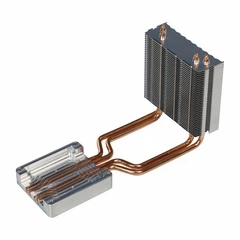
As a seasoned supplier in the field of car controller heatsinks, the question of "Which type of car controller heatsink is most efficient?" is one that I encounter frequently. In this blog, I'll delve into the different types of car controller heatsinks, analyze their efficiency, and provide insights to help you make an informed decision for your automotive needs.
Understanding the Importance of Car Controller Heatsinks
Car controllers are the brains behind various functions in modern vehicles, from engine management to infotainment systems. These controllers generate a significant amount of heat during operation. If this heat is not properly dissipated, it can lead to reduced performance, component failure, and even safety risks. That's where car controller heatsinks come in. They play a crucial role in maintaining the optimal temperature of the controllers, ensuring their reliable and efficient operation.
Types of Car Controller Heatsinks
1. Aluminum Heat Pipe Communication Module Heatsink
Aluminum heat pipe communication module heatsinks are a popular choice in the automotive industry. Aluminum is known for its excellent thermal conductivity, which allows it to transfer heat away from the car controller quickly. The heat pipes in these heatsinks further enhance heat transfer by using a phase-change process. The working fluid inside the heat pipe evaporates at the hot end (near the controller) and condenses at the cold end, releasing the heat. This process is highly efficient and can significantly improve the cooling performance of the heatsink.
The Aluminum Heat Pipe Communication Module Heatsink offers several advantages. Firstly, it has a high heat transfer coefficient, which means it can dissipate heat more effectively than traditional heatsinks. Secondly, the use of aluminum makes it lightweight, which is an important factor in automotive applications where weight reduction can improve fuel efficiency. Additionally, these heatsinks are designed to be compact, making them suitable for use in tight spaces within the vehicle.
2. Cavity-type Energy Storage Battery Water Cooling Plate
Cavity-type energy storage battery water cooling plates are another type of heatsink used in car controllers, especially in electric and hybrid vehicles. These cooling plates are designed to cool the energy storage batteries, which are a critical component of these vehicles. The cavity design allows for the circulation of coolant, such as water or a water-glycol mixture, which absorbs the heat from the batteries and transfers it away.
The Cavity-type Energy Storage Battery Water Cooling Plate offers several benefits. Water has a high specific heat capacity, which means it can absorb a large amount of heat without a significant increase in temperature. This makes water cooling an efficient way to dissipate heat from the batteries. The cavity design also provides a large surface area for heat transfer, further enhancing the cooling performance. Additionally, these cooling plates can be integrated into the battery pack, providing a compact and efficient cooling solution.
3. Automotive Controller Water Cooling Plate
Automotive controller water cooling plates are specifically designed to cool the car controllers themselves. Similar to the cavity-type energy storage battery water cooling plates, these plates use a coolant to absorb and transfer heat away from the controllers. The coolant is circulated through the plate using a pump, and the heat is dissipated through a radiator or a heat exchanger.
The Automotive Controller Water Cooling Plate offers precise temperature control. By adjusting the flow rate of the coolant, it is possible to maintain the controller at a specific temperature, which is essential for optimal performance. Water cooling also has a high heat transfer rate, which means it can quickly remove the heat generated by the controller. Additionally, these cooling plates can be customized to fit the specific requirements of the car controller, ensuring a perfect fit and efficient cooling.
Efficiency Comparison
When comparing the efficiency of these different types of car controller heatsinks, several factors need to be considered.
Thermal Conductivity
Aluminum has a high thermal conductivity, which makes the aluminum heat pipe communication module heatsink efficient at transferring heat. However, water has an even higher thermal conductivity when it comes to convective heat transfer. This gives the cavity-type energy storage battery water cooling plate and the automotive controller water cooling plate an advantage in terms of heat transfer efficiency.
Heat Transfer Capacity
The heat transfer capacity of a heatsink is determined by its ability to absorb and dissipate heat. Water cooling plates, due to the high specific heat capacity of water, have a larger heat transfer capacity compared to aluminum heat pipe heatsinks. This means they can handle a higher amount of heat generated by the car controller or the energy storage battery.
Space and Weight
Aluminum heat pipe communication module heatsinks are lightweight and compact, making them suitable for applications where space and weight are important considerations. On the other hand, water cooling systems require additional components such as pumps, radiators, and hoses, which can take up more space and add weight to the vehicle. However, the benefits of efficient cooling may outweigh these drawbacks in many cases.
Choosing the Most Efficient Heatsink
The choice of the most efficient car controller heatsink depends on several factors, including the specific application, the heat generation of the controller, the available space, and the budget.
If you need a lightweight and compact solution for a standard car controller, an aluminum heat pipe communication module heatsink may be the best choice. It offers good thermal performance and is easy to install.


For electric and hybrid vehicles, where the energy storage batteries generate a large amount of heat, a cavity-type energy storage battery water cooling plate is recommended. This type of heatsink can provide efficient cooling and help to extend the lifespan of the batteries.
If precise temperature control is required for the car controller, an automotive controller water cooling plate is the way to go. It can maintain the controller at a stable temperature, ensuring optimal performance.
Conclusion
In conclusion, there is no one-size-fits-all answer to the question of which type of car controller heatsink is most efficient. Each type has its own advantages and disadvantages, and the choice depends on the specific requirements of the automotive application. As a supplier of car controller heatsinks, I have a deep understanding of these products and can provide expert advice to help you select the most suitable heatsink for your needs.
If you are interested in learning more about our car controller heatsinks or would like to discuss a potential procurement, please feel free to get in touch. We are committed to providing high-quality products and excellent customer service.
References
- Incropera, F. P., & DeWitt, D. P. (2002). Fundamentals of Heat and Mass Transfer. John Wiley & Sons.
- Bergman, T. L., Lavine, A. S., Incropera, F. P., & DeWitt, D. P. (2011). Introduction to Heat Transfer. John Wiley & Sons.