


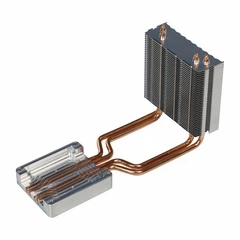
Hey there! As an aluminum cooling pipe supplier, I've been getting a ton of questions lately about whether aluminum cooling pipes or copper cooling pipes are better. So, I thought I'd dive into this topic and share my thoughts.
The Basics: How Cooling Pipes Work
Before we compare aluminum and copper cooling pipes, let's quickly go over how these pipes actually work. Cooling pipes are a crucial part of a cooling system. They're responsible for transferring heat away from the source, like an engine or an electronic component. The heat gets absorbed by the fluid inside the pipe, and then the pipe helps dissipate that heat into the surrounding environment.
Copper Cooling Pipes: The Old Favorite
Copper has been used in cooling systems for ages, and for good reason. It's an excellent conductor of heat. In fact, copper has a thermal conductivity of around 385 - 401 W/(m·K). That means it can quickly absorb and transfer heat away from the source. This high thermal conductivity makes copper cooling pipes great for applications where rapid heat transfer is crucial, like in high - performance computers or some industrial machinery.
Another advantage of copper is its durability. It's resistant to corrosion in many environments, which means copper cooling pipes can last a long time. They can also withstand high pressures without deforming easily. This makes them suitable for use in systems where there are significant pressure variations.


However, copper does have its downsides. One of the biggest issues is its weight. Copper is a relatively heavy metal, and in applications where weight is a concern, like in the aerospace or automotive industries, this can be a real drawback. Also, copper is more expensive than aluminum. The cost of raw copper is higher, and the manufacturing processes for copper cooling pipes can also be more costly.
Aluminum Cooling Pipes: The Rising Star
Now, let's talk about aluminum cooling pipes, which is what I'm all about. Aluminum has a thermal conductivity of about 205 W/(m·K), which is lower than copper. But don't let that number fool you. In many real - world applications, aluminum cooling pipes can perform just as well as copper ones.
One of the biggest advantages of aluminum is its weight. Aluminum is about one - third the weight of copper. This makes it ideal for applications where weight reduction is important. For example, in the automotive industry, using aluminum cooling pipes can help reduce the overall weight of the vehicle, which in turn can improve fuel efficiency.
Cost is another major factor. Aluminum is much cheaper than copper. This makes it a more cost - effective option for large - scale manufacturing. Whether you're producing a bunch of consumer electronics or a fleet of cars, choosing aluminum cooling pipes can save you a significant amount of money.
Aluminum is also highly malleable. It can be easily shaped into different forms, which gives designers more flexibility when creating cooling systems. You can find aluminum cooling pipes in a wide variety of shapes and sizes, from simple straight pipes to complex curved ones.
In terms of corrosion resistance, aluminum forms a thin oxide layer on its surface when exposed to air. This layer helps protect the metal from further corrosion. However, in some harsh environments, additional coatings may be required to enhance its corrosion resistance.
Applications: Where Each Shines
Automotive Industry
In the automotive world, both copper and aluminum cooling pipes have their places. Copper cooling pipes are still used in some high - end or high - performance vehicles where the need for rapid heat transfer outweighs the concerns about weight and cost. But aluminum is becoming the norm for most mainstream cars.
For instance, you can check out our Automobile Car Drainage Raditor. It uses aluminum cooling pipes to effectively cool the engine while keeping the weight down. And our Automotive Controller Water Cooling Plate is another great example of how aluminum can be used to cool critical automotive components.
Electronics Industry
In electronics, copper was the go - to for a long time because of its high thermal conductivity. But as electronic devices are getting smaller and lighter, aluminum is making inroads. For small consumer electronics like laptops and smartphones, aluminum cooling pipes can provide sufficient cooling while keeping the device lightweight. And in the field of communication, our Aluminum Heat Pipe Communication Module Heatsink shows how aluminum can be used effectively to cool communication modules.
The Verdict: Which is Better?
So, which is better, an aluminum cooling pipe or a copper cooling pipe? Well, it really depends on your specific needs. If you're in an application where weight and cost are major concerns, and you don't need the absolute highest thermal conductivity, then aluminum cooling pipes are the way to go. They're lightweight, cost - effective, and can be easily customized.
On the other hand, if you're dealing with a high - performance system where rapid heat transfer is critical, and weight and cost are less of an issue, then copper cooling pipes might be a better choice.
Let's Talk Business
If you're interested in learning more about our aluminum cooling pipes or want to discuss your specific cooling needs, I'd love to hear from you. Whether you're in the automotive, electronics, or any other industry that requires efficient cooling solutions, we've got the expertise and products to meet your requirements. Reach out to start a conversation about how our aluminum cooling pipes can benefit your business.
References
- "Thermal Conductivity of Metals and Alloys" - Handbook of Thermal Conductivity
- "Automotive Cooling System Design and Analysis" - SAE International Publications