


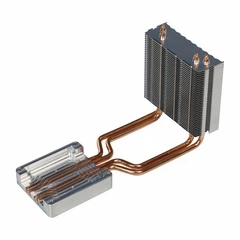
As a seasoned supplier of car controller heatsinks, I've witnessed firsthand the pivotal role these components play in the automotive industry. In this blog, we'll delve into the heat dissipation rate of high-quality car controller heatsinks, exploring the factors that influence it and why it matters for your vehicles.
Understanding Heat Dissipation Rate
The heat dissipation rate of a car controller heatsink refers to the amount of heat it can transfer from the car controller to the surrounding environment per unit of time. It is typically measured in watts (W). A higher heat dissipation rate means the heatsink can remove more heat, which is crucial for maintaining the optimal operating temperature of the car controller.
Car controllers, such as engine control units (ECUs), transmission control units (TCUs), and battery management systems (BMS), generate a significant amount of heat during operation. If this heat is not effectively dissipated, it can lead to overheating, which may cause component failure, reduced performance, and even safety hazards. Therefore, a high-quality heatsink with an appropriate heat dissipation rate is essential for the reliable and efficient operation of car controllers.
Factors Affecting the Heat Dissipation Rate
Several factors influence the heat dissipation rate of a car controller heatsink. Understanding these factors can help you choose the right heatsink for your specific application.
Material
The material of the heatsink plays a crucial role in its heat dissipation performance. Metals such as aluminum and copper are commonly used due to their high thermal conductivity. Aluminum is lightweight, corrosion-resistant, and cost-effective, making it a popular choice for automotive applications. Copper, on the other hand, has a higher thermal conductivity than aluminum but is heavier and more expensive. At our company, we use high-quality aluminum alloys to manufacture our heatsinks, ensuring excellent heat transfer capabilities while keeping the weight and cost in check.
Design
The design of the heatsink also affects its heat dissipation rate. Fin design, for example, is a critical factor. Fins increase the surface area of the heatsink, allowing for more efficient heat transfer to the surrounding air. Different fin shapes, sizes, and densities can have a significant impact on the heat dissipation performance. Our engineers use advanced computational fluid dynamics (CFD) simulations to optimize the fin design of our heatsinks, ensuring maximum heat transfer efficiency.


In addition to fin design, the overall shape and structure of the heatsink can also affect its performance. For example, some heatsinks are designed with a cavity or channel to allow for the flow of coolant, which can further enhance the heat dissipation rate. Our Cavity-type Energy Storage Battery Water Cooling Plate is a prime example of such a design, offering superior heat dissipation capabilities for high-power car controllers.
Surface Treatment
The surface treatment of the heatsink can also influence its heat dissipation rate. A smooth and clean surface can reduce the thermal resistance between the heatsink and the car controller, improving heat transfer efficiency. Additionally, some surface treatments, such as anodizing, can enhance the corrosion resistance of the heatsink, ensuring its long-term reliability. At our company, we use advanced surface treatment processes to ensure the high quality and performance of our heatsinks.
Airflow
The airflow around the heatsink is another important factor affecting its heat dissipation rate. Adequate airflow can carry away the heat from the heatsink, preventing it from building up. In automotive applications, the airflow is typically provided by the vehicle's cooling system, such as the radiator fan or the air intake system. However, the design of the vehicle and the placement of the heatsink can also affect the airflow. Our engineers take these factors into consideration when designing our heatsinks, ensuring that they are optimized for the specific airflow conditions of each application.
Measuring the Heat Dissipation Rate
Measuring the heat dissipation rate of a car controller heatsink is a complex process that requires specialized equipment and expertise. One common method is to use a thermal imaging camera to measure the temperature distribution of the heatsink under different operating conditions. By analyzing the temperature data, we can calculate the heat transfer rate and determine the effectiveness of the heatsink.
Another method is to use a calorimeter to measure the amount of heat transferred from the heatsink to the surrounding environment. This method provides a more accurate measurement of the heat dissipation rate but requires more sophisticated equipment and a controlled testing environment.
At our company, we have a state-of-the-art testing laboratory equipped with the latest thermal testing equipment. Our team of experienced engineers conducts rigorous testing on all our heatsinks to ensure that they meet or exceed the industry standards for heat dissipation performance.
Importance of Choosing the Right Heat Dissipation Rate
Choosing the right heat dissipation rate for your car controller heatsink is crucial for the reliable and efficient operation of your vehicle. If the heat dissipation rate is too low, the car controller may overheat, leading to component failure, reduced performance, and potential safety hazards. On the other hand, if the heat dissipation rate is too high, it may result in unnecessary cost and weight.
When selecting a heatsink, it is important to consider the power consumption of the car controller, the operating environment, and the airflow conditions. Our team of experts can help you determine the appropriate heat dissipation rate for your specific application and recommend the best heatsink solution for your needs.
Our Product Range
As a leading supplier of car controller heatsinks, we offer a wide range of products to meet the diverse needs of our customers. Our product portfolio includes Automobile Car Drainage Raditor, Automotive Controller Water Cooling Plate, and other custom-designed heatsinks.
All our products are manufactured using the latest technology and high-quality materials, ensuring excellent heat dissipation performance, reliability, and durability. We also offer custom design and manufacturing services to meet the specific requirements of our customers. Whether you need a standard heatsink or a custom-designed solution, we have the expertise and resources to deliver the best product for your application.
Conclusion
In conclusion, the heat dissipation rate of a high-quality car controller heatsink is a critical factor in the reliable and efficient operation of automotive electronics. By understanding the factors that affect the heat dissipation rate and choosing the right heatsink for your specific application, you can ensure the optimal performance and longevity of your car controllers.
At our company, we are committed to providing our customers with the highest quality car controller heatsinks and the best customer service. If you have any questions or need more information about our products, please feel free to contact us. We look forward to working with you to meet your automotive cooling needs.
References
- Incropera, F. P., & DeWitt, D. P. (2002). Fundamentals of heat and mass transfer. John Wiley & Sons.
- Holman, J. P. (2010). Heat transfer. McGraw-Hill.
- Bergman, T. L., Lavine, A. S., Incropera, F. P., & DeWitt, D. P. (2011). Introduction to heat transfer. John Wiley & Sons.