


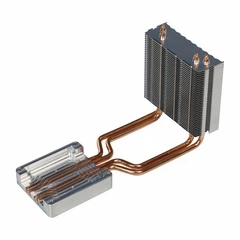
What is the heat dissipation capacity of water - cooled plate assemblies?
As a supplier of water - cooled plate assemblies, I am often asked about the heat dissipation capacity of these crucial components. In this blog post, I will delve into the factors that influence the heat dissipation capacity of water - cooled plate assemblies, their applications, and how to optimize their performance.
Understanding Water - Cooled Plate Assemblies
Water - cooled plate assemblies are heat exchangers that use water as a coolant to transfer heat from a heat source to the surrounding environment. They typically consist of a metal plate with internal channels through which water flows. The heat from the source, such as an electronic component or a mechanical device, is transferred to the water in the channels, and then the heated water is circulated away to a heat sink or radiator where the heat is dissipated.
Factors Influencing Heat Dissipation Capacity
1. Material of the Plate
The material of the water - cooled plate plays a significant role in its heat dissipation capacity. Metals with high thermal conductivity, such as copper and aluminum, are commonly used. Copper has a thermal conductivity of approximately 401 W/(m·K), while aluminum has a thermal conductivity of around 237 W/(m·K). Copper can transfer heat more efficiently than aluminum, but it is also more expensive. Aluminum is a popular choice due to its relatively high thermal conductivity, low cost, and light weight.
2. Flow Rate of the Coolant
The flow rate of the water through the channels of the water - cooled plate is another critical factor. A higher flow rate means that more water is available to absorb heat per unit time. However, increasing the flow rate also requires more energy to pump the water, and there is a limit to how much the flow rate can be increased before it causes excessive pressure drops in the system.
3. Channel Design
The design of the internal channels in the water - cooled plate can greatly affect heat dissipation. Channels with a larger surface area in contact with the plate can transfer heat more effectively. For example, micro - channels or finned channels can increase the surface area and enhance heat transfer. Additionally, the layout of the channels, such as parallel or serpentine, can impact the flow distribution and heat transfer uniformity.
4. Temperature Difference
The temperature difference between the heat source and the coolant is a fundamental driving force for heat transfer. According to Fourier's law of heat conduction, the rate of heat transfer is proportional to the temperature difference. A larger temperature difference allows for more efficient heat transfer from the heat source to the coolant.
Applications of Water - Cooled Plate Assemblies
1. Electronics Cooling
In the electronics industry, water - cooled plate assemblies are widely used to cool high - power components such as CPUs, GPUs, and power amplifiers. These components generate a large amount of heat during operation, and efficient cooling is essential to prevent overheating and ensure reliable performance. For example, in data centers, water - cooled plates can be used to cool server racks, reducing energy consumption and improving the overall efficiency of the data center.
2. Automotive Industry
The automotive industry also benefits from water - cooled plate assemblies. They are used in various applications, including Automobile Car Drainage Raditor and Automotive Controller Water Cooling Plate. In electric vehicles, water - cooled plates are used to cool the battery packs and power electronics, which helps to maintain optimal operating temperatures and extend the lifespan of these components.
3. Energy Storage Systems
In energy storage systems, such as Cavity - type Energy Storage Battery Water Cooling Plate, water - cooled plate assemblies are crucial for heat management. Batteries generate heat during charging and discharging processes, and excessive heat can reduce battery performance and lifespan. Water - cooled plates can effectively dissipate this heat and ensure the safe and efficient operation of the energy storage system.
Optimizing the Heat Dissipation Capacity of Water - Cooled Plate Assemblies
1. Selecting the Right Material
Based on the specific requirements of the application, choosing the appropriate material for the water - cooled plate is essential. If cost is a major concern and weight needs to be minimized, aluminum may be the best choice. However, for applications where high - performance heat transfer is required, copper may be more suitable.
2. Optimizing the Channel Design
Engineers can use computational fluid dynamics (CFD) simulations to optimize the channel design of the water - cooled plate. By analyzing the flow patterns and heat transfer characteristics, the channel layout, size, and shape can be adjusted to maximize heat dissipation and minimize pressure drops.
3. Controlling the Flow Rate
Proper control of the coolant flow rate is necessary to balance heat dissipation and energy consumption. Variable - speed pumps can be used to adjust the flow rate according to the heat load of the system, ensuring efficient operation under different conditions.


4. Improving the Contact between the Heat Source and the Plate
To enhance heat transfer, it is important to ensure good contact between the heat source and the water - cooled plate. Thermal interface materials (TIMs), such as thermal grease or pads, can be used to fill the microscopic gaps between the two surfaces and reduce thermal resistance.
Conclusion
The heat dissipation capacity of water - cooled plate assemblies is influenced by multiple factors, including the material of the plate, flow rate of the coolant, channel design, and temperature difference. Understanding these factors and optimizing the design and operation of water - cooled plate assemblies can significantly improve their heat dissipation performance.
Whether you are in the electronics, automotive, or energy storage industry, our water - cooled plate assemblies are designed to meet your specific heat dissipation needs. If you are interested in learning more about our products or have any questions regarding heat dissipation solutions, please feel free to contact us for procurement and further discussions.
References
- Incropera, F. P., DeWitt, D. P., Bergman, T. L., & Lavine, A. S. (2007). Fundamentals of Heat and Mass Transfer. Wiley.
- Cengel, Y. A., & Ghajar, A. J. (2015). Heat and Mass Transfer: Fundamentals and Applications. McGraw - Hill Education.