


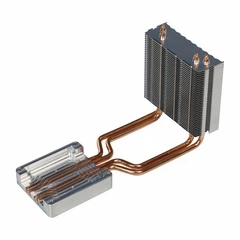
Hey there, car enthusiasts and industry folks! As a supplier of car controller heatsinks, I've seen firsthand the ins and outs of these essential components. Today, I'm gonna break down the pros and cons of aluminum car controller heatsinks.
Pros of Aluminum Car Controller Heatsinks
1. Excellent Thermal Conductivity
Aluminum is a rock - star when it comes to thermal conductivity. It can quickly transfer heat away from the car controller. This is super important because car controllers generate a fair amount of heat during operation. When the heat is efficiently dissipated, the controller can function at its optimal temperature. For example, in high - performance electric cars, where the controller has to manage a large amount of electrical power, an aluminum heatsink can prevent overheating. This means less risk of component failure and a longer lifespan for the car controller.
2. Lightweight
Compared to other materials like copper, aluminum is much lighter. In the automotive industry, weight is a big deal. Every extra pound can affect a car's fuel efficiency, acceleration, and handling. An aluminum heatsink helps keep the overall weight of the vehicle down. This is especially crucial for electric cars, where battery range is a major concern. A lighter heatsink means the car can go further on a single charge, making it more appealing to consumers.
3. Cost - Effective
Aluminum is relatively inexpensive compared to some other metals used for heatsinks. This makes it a great choice for mass - produced cars. Car manufacturers can save on production costs without sacrificing too much in terms of performance. As a supplier, I know that cost is always a major factor for our clients. Aluminum heatsinks offer a good balance between cost and functionality, which is why they are so widely used in the automotive industry.
4. Corrosion Resistance
Aluminum has a natural oxide layer that forms on its surface, which protects it from corrosion. In a car, the heatsink is exposed to various environmental conditions, such as moisture and road salt. This corrosion - resistant property ensures that the heatsink can last a long time without degrading. It also means less maintenance for the car owner, which is always a plus.
5. Easy to Manufacture
Aluminum is easy to work with. It can be easily molded, extruded, or machined into different shapes and sizes. This flexibility allows us to create custom - designed heatsinks to fit the specific needs of different car controllers. Whether it's a small, compact design for a sub - compact car or a larger, more complex heatsink for a high - end luxury vehicle, we can manufacture it with relative ease.
Cons of Aluminum Car Controller Heatsinks
1. Lower Thermal Conductivity than Copper
While aluminum has good thermal conductivity, it's not as high as that of copper. In some high - power applications, copper might be a better choice. For example, in high - performance racing cars where the controller is under extreme stress and generates a large amount of heat, a copper heatsink could provide better heat dissipation. However, the cost and weight of copper are significant drawbacks, which is why aluminum is still the more popular choice in most cases.
2. Softness
Aluminum is a relatively soft metal. This means it can be easily dented or scratched during handling or installation. A damaged heatsink may not perform as well as an undamaged one, as the surface area available for heat transfer could be reduced. To mitigate this, we often use protective coatings or packaging to prevent damage during shipping and installation.
3. Thermal Expansion
Aluminum has a relatively high coefficient of thermal expansion. This means that as the temperature changes, the size of the heatsink can change significantly. In a car, where the temperature can vary widely, this can cause problems. For example, if the heatsink expands too much, it could put stress on the car controller or other components, potentially leading to mechanical failure.
4. Surface Finish Requirements
To achieve optimal heat transfer, the surface of the aluminum heatsink needs to be smooth and clean. Any roughness or contaminants on the surface can reduce the efficiency of heat transfer. This means that additional processing steps may be required to ensure a proper surface finish, which can increase the manufacturing cost.
Our Product Range
As a supplier, we offer a wide range of car controller heatsinks. We also have related products like the Automotive Controller Water Cooling Plate, which provides an additional layer of cooling for the car controller. Our Automobile Car Drainage Raditor is another great product that helps with overall cooling in the car. And for those interested in energy storage, our Cavity - type Energy Storage Battery Water Cooling Plate is a top - notch solution.
Contact Us for Procurement
If you're in the market for high - quality car controller heatsinks or any of our related products, don't hesitate to reach out. We're here to provide you with the best solutions for your automotive cooling needs. Whether you're a car manufacturer, a repair shop, or an individual enthusiast, we can work with you to find the right product.


References
- "Automotive Thermal Management Handbook" by some well - known automotive experts.
- Industry reports on automotive cooling systems from leading research firms.