


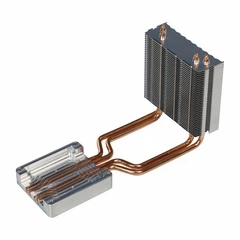
Hey there! As a supplier of cooling system components, I've seen firsthand the wide range of parts that make up these essential systems. In this blog, I'm gonna break down the different types of cooling system components, so you can get a better understanding of what goes into keeping things cool.
Radiators
Let's start with radiators. These are like the heart of many cooling systems, especially in cars and industrial machinery. A radiator's job is to transfer heat from the coolant (usually a mixture of water and antifreeze) to the surrounding air. It's made up of a bunch of small tubes and fins. The coolant flows through the tubes, and as air passes over the fins, it takes the heat away from the coolant.
There are different types of radiators too. For instance, aluminum radiators are super popular because they're lightweight and have good heat transfer properties. We offer Cavity - type Energy Storage Battery Water Cooling Plate, which is a specialized radiator component designed for energy - storage batteries. It helps in efficiently dissipating the heat generated by these high - energy batteries, ensuring their optimal performance and longevity.
Cooling Fans
Next up are cooling fans. These guys are crucial for making sure there's enough airflow over the radiator. When a vehicle is moving, there's usually enough natural air movement, but when it's stationary or moving slowly, the fans kick in. There are two main types: mechanical fans and electric fans.
Mechanical fans are connected to the engine via a belt. They spin at a speed proportional to the engine's RPM. Electric fans, on the other hand, are powered by the vehicle's electrical system. They can be controlled more precisely, which is great for maintaining the right temperature. In some high - performance cooling systems, multiple fans might be used to boost the airflow and improve cooling efficiency.
Water Pumps
Water pumps are responsible for circulating the coolant throughout the cooling system. They're typically driven by the engine, either by a belt or a chain. The pump sucks in the coolant from the radiator and pushes it through the engine block and cylinder head, where it picks up heat. Then it sends the hot coolant back to the radiator to be cooled down again.
A good water pump is essential for the proper functioning of the cooling system. If it fails, the coolant won't circulate, and the engine can overheat quickly. That's why we make sure our water pumps are built to last, with high - quality materials and precision engineering.
Thermostats
Thermostats act as the temperature regulators in the cooling system. They're basically a valve that opens and closes depending on the coolant temperature. When the engine is cold, the thermostat stays closed, which allows the engine to warm up quickly. Once the coolant reaches a certain temperature (usually around 195 - 220°F), the thermostat opens, and the coolant starts flowing through the radiator to be cooled.
This is important because engines need to operate within a specific temperature range to work efficiently. If it's too cold, the engine won't burn fuel properly, and if it's too hot, it can cause damage to engine components.
Coolant Reservoirs
Coolant reservoirs are like little storage tanks for the coolant. They provide a place for the coolant to expand and contract as it heats up and cools down. When the coolant gets hot and expands, it flows into the reservoir. When it cools and contracts, the reservoir supplies the extra coolant back to the system.
These reservoirs are usually made of plastic and are transparent, so you can easily check the coolant level. Keeping the right amount of coolant in the system is vital for proper cooling and preventing overheating.
Heat Exchangers
Heat exchangers are used in various applications to transfer heat between two fluids without them mixing. In cooling systems, they can be used to cool down oil, transmission fluid, or even air. For example, in some high - performance cars, an oil cooler (a type of heat exchanger) is used to keep the engine oil at the right temperature.
We also have Automotive Controller Water Cooling Plate, which acts as a heat exchanger for automotive controllers. These controllers generate a lot of heat during operation, and the cooling plate helps in dissipating that heat to ensure the controllers work properly.
Cooling Plates
Cooling plates are flat, usually made of metal, and are used to cool specific components. They're often used in electronics, like computers and power electronics. We offer Lightweight Automotive Controller Water Cooling Plate, which is designed to cool automotive controllers while being lightweight. This is important for automotive applications where reducing weight can improve fuel efficiency and performance.


Air - to - Air Intercoolers
Air - to - air intercoolers are used in turbocharged and supercharged engines. Their main job is to cool the compressed air coming from the turbocharger or supercharger before it enters the engine. When air is compressed, it heats up, and hot air is less dense. By cooling the compressed air, the intercooler increases its density, which means more oxygen can enter the engine. This allows the engine to burn more fuel and produce more power.
Expansion Tanks
Expansion tanks are similar to coolant reservoirs but are often used in larger industrial cooling systems. They provide a buffer for the expansion of the coolant due to temperature changes. They also help in maintaining a constant pressure in the cooling system, which is important for the proper operation of pumps and other components.
Hose Assemblies
Hose assemblies are used to connect different components in the cooling system, like the radiator to the engine and the water pump to the thermostat. They're made of rubber or other flexible materials that can withstand the high temperatures and pressures in the system. A good hose assembly is leak - proof and durable, ensuring that the coolant flows smoothly throughout the system.
Why Choose Our Cooling System Components?
At our company, we take pride in offering high - quality cooling system components. We use the latest manufacturing techniques and top - notch materials to ensure that our products are reliable and efficient. Whether you're in the automotive industry, electronics, or any other field that requires cooling solutions, we've got you covered.
Our components are designed to meet the strictest industry standards and are rigorously tested before they leave our factory. We also offer customization options, so you can get the exact components you need for your specific application.
Let's Connect!
If you're in the market for cooling system components, I'd love to hear from you. Whether you need a single part or a complete cooling system solution, we can help. Just reach out to us, and we'll work with you to find the best products for your needs. Let's start a conversation about how we can help keep your systems cool and running smoothly.
References
- Cooling System Basics: HowStuffWorks
- Automotive Cooling System Design: SAE International Publications
- Industrial Cooling System Handbook: ASHRAE