


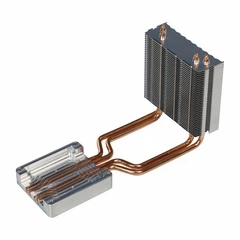
Hey there! As a supplier of water-cooled plate assemblies, I've seen firsthand how crucial it is to prevent corrosion in these components. Corrosion can not only reduce the efficiency of the water-cooled plate assemblies but also lead to costly repairs and replacements. So, in this blog, I'm gonna share some effective corrosion prevention methods for water-cooled plate assemblies.
Understanding the Causes of Corrosion in Water-Cooled Plate Assemblies
Before we dive into the prevention methods, it's important to understand what causes corrosion in water-cooled plate assemblies. Corrosion is basically a chemical reaction that occurs when a metal comes into contact with an electrolyte, such as water. In the case of water-cooled plate assemblies, the water that circulates through the plates can act as an electrolyte, especially if it contains dissolved salts, oxygen, or other impurities.
There are several factors that can accelerate the corrosion process in water-cooled plate assemblies. These include:
- High temperatures: Elevated temperatures can increase the rate of chemical reactions, including corrosion.
- pH levels: Water with a high or low pH can be more corrosive than neutral water.
- Oxygen content: Dissolved oxygen in the water can react with the metal in the plates, leading to oxidation and corrosion.
- Impurities: Minerals, salts, and other impurities in the water can also contribute to corrosion.
Corrosion Prevention Methods
Now that we know what causes corrosion, let's take a look at some effective prevention methods.
1. Use Corrosion-Resistant Materials
One of the simplest ways to prevent corrosion in water-cooled plate assemblies is to use corrosion-resistant materials. For example, stainless steel is a popular choice because it contains chromium, which forms a protective oxide layer on the surface of the metal, preventing further corrosion. Aluminum is another commonly used material, especially in automotive applications, as it has good thermal conductivity and is relatively resistant to corrosion.
However, it's important to note that even corrosion-resistant materials can still corrode under certain conditions. So, it's essential to take additional precautions to protect the plates.
2. Coat the Plates
Another effective way to prevent corrosion is to coat the plates with a protective layer. There are several types of coatings available, including:


- Epoxy coatings: Epoxy coatings are durable and provide excellent protection against corrosion. They can be applied to the surface of the plates using a variety of methods, such as spraying or dipping.
- Ceramic coatings: Ceramic coatings are also highly resistant to corrosion and can withstand high temperatures. They are often used in applications where the plates are exposed to harsh environments.
- Zinc coatings: Zinc coatings, also known as galvanizing, can provide sacrificial protection to the underlying metal. Zinc is more reactive than the metal in the plates, so it corrodes first, protecting the plates from damage.
3. Control the Water Quality
As mentioned earlier, the quality of the water that circulates through the plates can have a significant impact on the corrosion rate. So, it's important to control the water quality by:
- Using deionized water: Deionized water has a very low concentration of dissolved salts and other impurities, which can reduce the risk of corrosion.
- Adding corrosion inhibitors: Corrosion inhibitors are chemicals that can be added to the water to prevent or slow down the corrosion process. There are several types of corrosion inhibitors available, including organic and inorganic inhibitors.
- Monitoring the pH levels: Maintaining the pH levels of the water within a specific range can help prevent corrosion. For example, most water-cooled plate assemblies operate best at a pH between 6.5 and 8.5.
4. Design the System Properly
The design of the water-cooled plate assembly system can also play a role in preventing corrosion. Here are some design considerations:
- Avoid stagnant water: Stagnant water can create pockets of high oxygen concentration, which can accelerate the corrosion process. So, it's important to design the system to ensure that the water is constantly flowing through the plates.
- Minimize the use of dissimilar metals: When different metals are in contact with each other in the presence of an electrolyte, a galvanic cell can be formed, which can lead to corrosion. So, it's best to use the same type of metal throughout the system or to use insulating materials to separate dissimilar metals.
- Provide proper drainage: Ensuring that the system has proper drainage can help prevent the accumulation of water, which can lead to corrosion.
Case Studies
To illustrate the effectiveness of these corrosion prevention methods, let's take a look at some real-world examples.
- Cavity-type Energy Storage Battery Water Cooling Plate: This water cooling plate is designed for energy storage batteries and is made from high-quality aluminum. The plates are coated with a special epoxy coating to provide excellent protection against corrosion. In addition, the system uses deionized water and corrosion inhibitors to control the water quality. As a result, the plates have a long service life and require minimal maintenance.
- Automobile Car Drainage Raditor: This radiator is used in automobiles to cool the engine. It is made from aluminum and is designed to withstand high temperatures and harsh environments. The radiator is coated with a ceramic coating to provide excellent protection against corrosion. In addition, the system uses a closed-loop cooling system to prevent the entry of impurities and to maintain the water quality.
- Aluminum Heat Pipe Communication Module Heatsink: This heatsink is used in communication modules to dissipate heat. It is made from aluminum and is designed to be lightweight and efficient. The heatsink is coated with a zinc coating to provide sacrificial protection against corrosion. In addition, the system uses a water-cooling system with a corrosion inhibitor to prevent the corrosion of the plates.
Conclusion
In conclusion, corrosion prevention is essential for ensuring the long-term performance and reliability of water-cooled plate assemblies. By using corrosion-resistant materials, coating the plates, controlling the water quality, and designing the system properly, you can significantly reduce the risk of corrosion and extend the service life of the plates.
If you're in the market for high-quality water-cooled plate assemblies, look no further! As a leading supplier in the industry, we offer a wide range of products that are designed to meet your specific needs. Our water-cooled plate assemblies are made from the highest quality materials and are coated with a protective layer to prevent corrosion. We also offer customized solutions to ensure that our products fit your exact specifications.
So, if you're interested in learning more about our products or would like to discuss your specific requirements, please don't hesitate to contact us. We'd be happy to help you find the perfect water-cooled plate assembly for your application.
References
- Fontana, M. G. (1986). Corrosion Engineering (3rd ed.). McGraw-Hill.
- Uhlig, H. H., & Revie, R. W. (1985). Corrosion and Corrosion Control: An Introduction to Corrosion Science and Engineering (3rd ed.). Wiley.
- Schweitzer, P. A. (2011). Corrosion Resistance Tables (5th ed.). McGraw-Hill.