


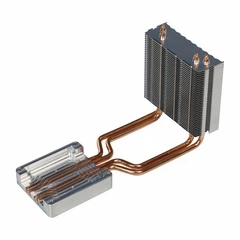
Tunnel brazing is a widely used process in the manufacturing industry, especially for producing components like Aluminum Heat Pipe Communication Module Heatsink, Automotive Controller Water Cooling Plate, and Lightweight Automotive Controller Water Cooling Plate. As a tunnel brazing process supplier, I have encountered various common defects in this process over the years. In this blog, I will discuss these defects and provide practical solutions to address them.
Common Defects in Tunnel Brazing Process
1. Incomplete Brazing Joints
One of the most prevalent issues in tunnel brazing is incomplete brazing joints. This occurs when the filler metal fails to fully flow and bond with the base materials. Incomplete joints can significantly weaken the structural integrity of the brazed components, leading to potential failures during operation.
The causes of incomplete brazing joints can be multifaceted. Firstly, improper surface preparation is a major culprit. If the surfaces of the base materials are contaminated with oxides, oils, or other impurities, the filler metal will have difficulty wetting and spreading across the surfaces. Secondly, incorrect brazing temperature or time can also result in incomplete joints. If the temperature is too low, the filler metal may not reach its melting point, while if the time is too short, the filler metal may not have enough time to flow and bond properly.
2. Porosity in Brazed Joints
Porosity refers to the presence of small holes or voids in the brazed joints. These pores can reduce the strength and corrosion resistance of the joints, making them more susceptible to failure.
Porosity can be caused by several factors. One common cause is the presence of gas in the brazing environment. During the brazing process, gases such as oxygen, nitrogen, or water vapor can become trapped in the molten filler metal, forming pores when the metal solidifies. Another cause is the improper selection of filler metal. If the filler metal has a high gas content or a low fluidity, it is more likely to form pores during brazing.
3. Excessive Brazing Filler Metal
Excessive use of brazing filler metal can lead to several problems. Firstly, it can cause the formation of large fillets or beads at the brazed joints, which can increase the weight and cost of the components. Secondly, excessive filler metal can also result in the formation of brittle intermetallic compounds, which can reduce the strength and ductility of the joints.
The main cause of excessive brazing filler metal is the incorrect dosing of the filler metal. If too much filler metal is applied, it will accumulate at the joints, leading to the problems mentioned above.
4. Distortion of Brazed Components
Distortion is another common defect in tunnel brazing. It occurs when the brazed components undergo dimensional changes or warping during the brazing process. Distortion can affect the fit and function of the components, requiring additional machining or rework to correct.
The primary cause of distortion is the thermal stress generated during the brazing process. As the components are heated and cooled, they expand and contract at different rates, leading to internal stresses that can cause distortion. Improper fixturing or clamping of the components during brazing can also exacerbate the problem.
Solutions to Address the Defects
1. Solutions for Incomplete Brazing Joints
- Proper Surface Preparation: To ensure complete brazing joints, it is crucial to prepare the surfaces of the base materials properly. This involves cleaning the surfaces thoroughly to remove any contaminants. Methods such as degreasing, pickling, or sandblasting can be used to achieve a clean and oxide-free surface.
- Optimize Brazing Parameters: The brazing temperature and time should be carefully controlled to ensure that the filler metal reaches its melting point and has enough time to flow and bond with the base materials. It is recommended to conduct thorough testing and optimization of the brazing parameters based on the specific materials and components being brazed.
2. Solutions for Porosity in Brazed Joints
- Control the Brazing Environment: To minimize porosity, it is essential to control the brazing environment to reduce the presence of gases. This can be achieved by using a protective atmosphere, such as nitrogen or argon, during the brazing process. Additionally, proper ventilation of the brazing chamber can help remove any gases generated during brazing.
- Select the Right Filler Metal: Choosing the appropriate filler metal is crucial for reducing porosity. Filler metals with low gas content and high fluidity are preferred, as they are less likely to form pores during brazing.
3. Solutions for Excessive Brazing Filler Metal
- Accurate Dosing of Filler Metal: To avoid excessive use of brazing filler metal, it is important to accurately dose the filler metal based on the joint design and requirements. This can be achieved by using precision dosing equipment or by following a strict dosing protocol.
- Optimize Joint Design: The joint design can also play a role in reducing the amount of filler metal required. By designing joints with proper clearance and fit, the filler metal can be used more efficiently, reducing the risk of excessive filler metal.
4. Solutions for Distortion of Brazed Components
- Minimize Thermal Stress: To reduce distortion, it is important to minimize the thermal stress generated during the brazing process. This can be achieved by using a slow heating and cooling rate, as well as by using preheating and post-heating techniques. Additionally, proper fixturing and clamping of the components can help distribute the thermal stress evenly and prevent distortion.
- Design for Distortion Control: When designing the components, it is important to consider the potential for distortion and incorporate features that can help control it. For example, adding stiffeners or ribs to the components can increase their rigidity and reduce the likelihood of distortion.
Conclusion
In conclusion, the tunnel brazing process is a complex and critical manufacturing technique that requires careful attention to detail to ensure high-quality brazed components. By understanding the common defects in tunnel brazing and implementing the appropriate solutions, we can significantly improve the quality and reliability of the brazed products.
As a tunnel brazing process supplier, we are committed to providing our customers with the highest quality brazed components. Our team of experts has extensive experience in addressing the challenges associated with tunnel brazing and can offer customized solutions to meet the specific needs of our customers.


If you are interested in our tunnel brazing services or have any questions about the process, please feel free to contact us for a consultation. We look forward to working with you to achieve your manufacturing goals.
References
- [1] Metals Handbook: Brazing, Soldering, and Adhesive Bonding, ASM International, 1993.
- [2] Principles of Brazing, American Welding Society, 2007.
- [3] Brazing Technology: Principles and Applications, Butterworth-Heinemann, 2013.