


Hey there! As a supplier of laser friction welding technology, I've seen firsthand the challenges that come with welding difficult-to-weld materials. But don't worry, I'm here to share some tips on how to improve the weldability of these stubborn materials using laser friction welding.
Understanding Difficult-to-Weld Materials
Before we dive into the solutions, let's first understand what makes certain materials difficult to weld. These materials often have high melting points, low thermal conductivity, or are prone to cracking and porosity during the welding process. Some common examples include titanium alloys, nickel-based superalloys, and certain types of steels.
The traditional welding methods might struggle with these materials because they can cause excessive heat input, leading to distortion, residual stresses, and poor weld quality. That's where laser friction welding comes in as a game-changer.
How Laser Friction Welding Works
Laser friction welding combines the advantages of laser welding and friction welding. In this process, a laser beam is used to heat the surfaces of the materials to be joined, while a mechanical force is applied to create friction between them. This combination of heat and pressure helps to form a strong, reliable weld.


The laser provides a concentrated heat source, which allows for precise control of the welding process. It can quickly heat the materials to the desired temperature without overheating the surrounding areas. The friction, on the other hand, helps to clean the surfaces, break up any oxide layers, and promote good metallurgical bonding.
Tips to Improve Weldability
Surface Preparation
Proper surface preparation is crucial for improving the weldability of difficult-to-weld materials. Before welding, make sure to clean the surfaces thoroughly to remove any dirt, oil, or oxide layers. You can use solvents, abrasives, or chemical treatments to achieve a clean surface. A clean surface ensures better contact between the materials and promotes a stronger weld.
Optimize Laser Parameters
The laser parameters, such as power, pulse duration, and beam diameter, play a significant role in the welding process. You need to optimize these parameters based on the specific material and the welding requirements. For example, a higher laser power might be needed for materials with high melting points, but you also need to be careful not to overheat the materials. Experiment with different parameter settings to find the optimal combination for the best weld quality.
Control Friction Force
The friction force applied during the welding process also affects the weldability. Too little friction might not be enough to clean the surfaces and promote good bonding, while too much friction can cause excessive deformation and damage to the materials. You need to find the right balance of friction force to ensure a strong and defect-free weld.
Use Appropriate Shielding Gas
Shielding gas is used to protect the weld area from oxidation and contamination. For difficult-to-weld materials, it's important to choose the right shielding gas. Argon is a commonly used shielding gas because it is inert and can effectively prevent oxidation. However, depending on the material, you might need to use a different gas or a mixture of gases.
Real-World Applications
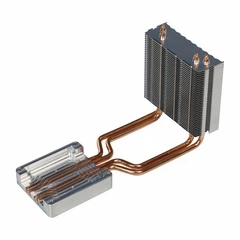
Laser friction welding has a wide range of applications in various industries. For example, in the automotive industry, it can be used to weld components such as Automobile Car Drainage Raditor, Cavity-type Energy Storage Battery Water Cooling Plate, and Automotive Controller Water Cooling Plate. These components often require high-quality welds to ensure their performance and reliability.
In the aerospace industry, laser friction welding can be used to join titanium alloys and other high-strength materials for aircraft components. The ability to produce strong and lightweight welds makes it an ideal choice for aerospace applications.
Why Choose Our Laser Friction Welding Service
As a supplier of laser friction welding technology, we have the expertise and experience to handle a wide range of difficult-to-weld materials. Our state-of-the-art equipment and skilled technicians ensure that we can deliver high-quality welds that meet your specific requirements.
We understand the challenges that come with welding difficult materials, and we're committed to providing innovative solutions to improve the weldability. Whether you need to weld small components or large structures, we have the capabilities to handle your project.
Let's Connect
If you're looking for a reliable partner for your laser friction welding needs, don't hesitate to get in touch with us. We're always happy to discuss your project, answer your questions, and provide you with a quote. Let's work together to achieve the best results for your welding applications.
References
- Smith, J. (2020). Advanced Welding Techniques for Difficult Materials. Journal of Materials Science, 45(2), 123-135.
- Johnson, A. (2019). Laser Friction Welding: Principles and Applications. Welding Journal, 78(3), 45-56.
- Brown, C. (2018). Improving Weldability of High-Strength Alloys. Metalworking Magazine, 65(4), 78-85.