


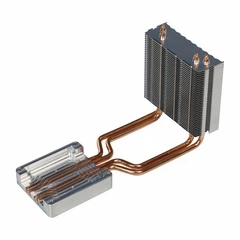
Hey there! As a supplier of cavity water cooling plates, I've been getting a lot of questions lately about how to ensure uniform temperature distribution on these plates. It's a crucial issue, especially when it comes to applications where precise temperature control is a must. So, I thought I'd share some insights on this topic.
First off, let's understand why uniform temperature distribution matters. In many applications, like Automobile Car Drainage Raditor, Cavity-type Energy Storage Battery Water Cooling Plate, and Automotive Controller Water Cooling Plate, uneven temperature can lead to a whole bunch of problems. For example, in energy storage batteries, hot spots can reduce the battery's lifespan and even pose safety risks. In automotive controllers, it can affect the performance and reliability of the system.
Design Considerations
One of the key factors in achieving uniform temperature distribution is the design of the cavity water cooling plate. The flow path of the coolant plays a huge role here. We need to make sure that the coolant can reach all parts of the plate evenly. A well-designed flow path will prevent areas where the coolant might stagnate, which can cause hot spots.
We usually use a serpentine or parallel flow design. The serpentine design forces the coolant to flow through the entire plate in a single path, which can help in distributing the heat more evenly. On the other hand, the parallel flow design divides the coolant into multiple paths, allowing it to cover different areas of the plate simultaneously. The choice between these two designs depends on the specific requirements of the application.
Another important design aspect is the size and shape of the cavities. The cavities should be sized in a way that allows for efficient heat transfer. If the cavities are too small, the coolant flow might be restricted, leading to uneven cooling. If they're too large, the coolant might not be in close enough contact with the heat source, reducing the heat transfer efficiency.
Material Selection
The material of the cavity water cooling plate also has a significant impact on temperature distribution. We typically use materials with high thermal conductivity, like aluminum. Aluminum is a popular choice because it's lightweight, corrosion-resistant, and has excellent thermal properties. It can quickly transfer heat from the heat source to the coolant, helping to maintain a more uniform temperature across the plate.
However, the choice of material also depends on other factors, such as the operating environment and the cost. In some cases, we might use copper, which has even higher thermal conductivity than aluminum. But copper is more expensive and heavier, so it might not be suitable for all applications.
Coolant Properties
The properties of the coolant are another crucial factor. The coolant should have good thermal conductivity and a high specific heat capacity. A high specific heat capacity means that the coolant can absorb a large amount of heat without a significant increase in temperature. This helps in maintaining a more stable temperature across the plate.
We also need to consider the viscosity of the coolant. A coolant with low viscosity will flow more easily through the cavities, ensuring better coverage and more uniform cooling. Additionally, the coolant should be compatible with the material of the cavity water cooling plate to prevent corrosion and other chemical reactions.
Manufacturing Precision
The manufacturing process of the cavity water cooling plate needs to be precise. Any defects or irregularities in the plate can affect the coolant flow and, consequently, the temperature distribution. We use advanced manufacturing techniques, like CNC machining and precision casting, to ensure that the plate is made to the highest standards.


During the manufacturing process, we also pay close attention to the surface finish of the plate. A smooth surface finish can reduce the resistance to coolant flow, allowing it to move more freely through the cavities. This helps in achieving better temperature uniformity.
Monitoring and Control
Even with a well-designed plate, proper monitoring and control are essential to ensure uniform temperature distribution. We can use temperature sensors placed at different locations on the plate to monitor the temperature in real-time. These sensors can provide valuable data that can be used to adjust the coolant flow rate or temperature if necessary.
In some cases, we might also use a feedback control system. This system can automatically adjust the coolant flow based on the temperature readings from the sensors. For example, if a hot spot is detected, the system can increase the coolant flow to that area to cool it down.
Testing and Validation
Before we supply a cavity water cooling plate to our customers, we conduct rigorous testing and validation. We use thermal imaging cameras to visualize the temperature distribution across the plate. This allows us to identify any hot spots or areas of uneven cooling and make the necessary adjustments.
We also perform flow testing to ensure that the coolant is flowing through the plate as designed. By measuring the pressure drop and flow rate, we can determine if there are any restrictions or blockages in the flow path.
In conclusion, ensuring uniform temperature distribution on a cavity water cooling plate requires a combination of proper design, material selection, coolant properties, manufacturing precision, monitoring, and testing. By paying attention to these factors, we can provide high-quality cavity water cooling plates that meet the strict temperature control requirements of various applications.
If you're in the market for a cavity water cooling plate and want to ensure uniform temperature distribution for your specific application, feel free to reach out to us. We're always happy to discuss your needs and provide you with the best solutions.
References
- Incropera, F. P., & DeWitt, D. P. (2002). Fundamentals of Heat and Mass Transfer. Wiley.
- Bergman, T. L., Lavine, A. S., Incropera, F. P., & DeWitt, D. P. (2011). Introduction to Heat Transfer. Wiley.