


Ensuring the consistency of laser friction welding quality in batch production is a critical challenge for any Laser friction welding supplier. As a provider in this field, I understand the importance of maintaining high - quality standards throughout the entire production process. In this blog, I will share some key strategies and practices that can help us achieve consistent laser friction welding quality in batch production.
1. Equipment Calibration and Maintenance
The first step in ensuring consistent welding quality is to keep the laser friction welding equipment in optimal condition. Regular calibration of the laser source, welding head, and other components is essential. The laser power, beam quality, and focal length need to be accurately calibrated to ensure that the welding parameters remain stable. For example, a slight deviation in laser power can lead to inconsistent weld penetration and strength.
Moreover, proper maintenance of the equipment is crucial. This includes cleaning the optical components, checking the cooling system, and lubricating moving parts. A well - maintained machine is less likely to experience breakdowns or malfunctions that could affect the welding quality. By following a strict maintenance schedule, we can minimize the risk of quality variations caused by equipment issues.
2. Standardization of Welding Parameters
Standardizing the welding parameters is another key factor in achieving consistent quality. This involves determining the optimal values for variables such as laser power, welding speed, pressure, and frequency. These parameters should be based on extensive testing and research to ensure that they are suitable for the specific materials and joint designs being welded.
For instance, when welding different types of metals, the optimal laser power and welding speed may vary significantly. By establishing a set of standardized parameters for each material and joint configuration, we can ensure that the welding process is repeatable and consistent. It is also important to document these parameters and train the operators to follow them precisely.


3. Quality Control during Production
Implementing a comprehensive quality control system is essential for batch production. This includes both in - process inspection and final product inspection. In - process inspection allows us to detect any potential issues early in the production process, such as improper weld bead formation or incomplete fusion. This can be done using non - destructive testing methods, such as ultrasonic testing or X - ray inspection.
Final product inspection is equally important. We can use a combination of visual inspection, mechanical testing, and chemical analysis to ensure that the welded products meet the required quality standards. For example, tensile testing can be used to measure the strength of the welds, while hardness testing can provide information about the material properties of the welded area.
4. Operator Training and Skill Development
The skills and knowledge of the operators play a significant role in ensuring consistent welding quality. Proper training is essential to ensure that the operators understand the welding process, the equipment, and the quality control procedures. They should be trained to recognize and address any issues that may arise during the welding process.
In addition to initial training, continuous skill development is also important. This can be achieved through regular training sessions, workshops, and on - the - job training. By keeping the operators updated on the latest technologies and best practices, we can improve the overall quality of the welding process.
5. Material Selection and Preparation
The quality of the materials used in laser friction welding can have a significant impact on the welding quality. It is important to select high - quality materials that are suitable for the welding process. This includes considering factors such as the material composition, thickness, and surface finish.
Proper material preparation is also crucial. The surfaces to be welded should be clean and free of contaminants, such as oil, grease, and oxides. This can be achieved through processes such as degreasing, sandblasting, or chemical cleaning. By ensuring that the materials are properly prepared, we can improve the weldability and the overall quality of the welds.
6. Process Monitoring and Data Analysis
Monitoring the welding process in real - time and analyzing the data can provide valuable insights into the quality of the welds. By using sensors and monitoring systems, we can collect data on parameters such as laser power, welding speed, and temperature. This data can be used to detect any trends or anomalies in the welding process and take corrective actions if necessary.
Data analysis can also help us optimize the welding process. By analyzing the data from previous production runs, we can identify areas for improvement and make adjustments to the welding parameters or the equipment. This can lead to more consistent welding quality and higher production efficiency.
Application Examples
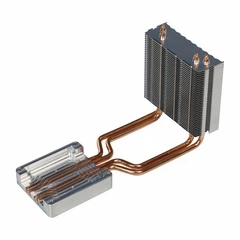
Let's take a look at some specific applications where ensuring consistent laser friction welding quality is crucial. For example, in the automotive industry, Lightweight Automotive Controller Water Cooling Plate and Automotive Controller Water Cooling Plate require high - quality welds to ensure proper cooling and performance. In the communication industry, Aluminum Heat Pipe Communication Module Heatsink also rely on consistent laser friction welding to ensure efficient heat transfer.
Conclusion
Ensuring the consistency of laser friction welding quality in batch production requires a comprehensive approach that includes equipment calibration and maintenance, standardization of welding parameters, quality control, operator training, material selection and preparation, and process monitoring. By implementing these strategies, we can improve the overall quality of the welded products and meet the high - quality requirements of our customers.
If you are interested in our laser friction welding services or have any questions about ensuring welding quality, please feel free to contact us for further discussion and potential procurement opportunities.
References
- Smith, J. (2018). Laser Welding Technology: Principles and Applications. Publisher: ABC Press.
- Johnson, R. (2019). Quality Control in Welding Processes. Journal of Welding Research, 25(3), 123 - 135.
- Brown, T. (2020). Advanced Materials for Laser Welding. Materials Science Review, 30(2), 45 - 58.