


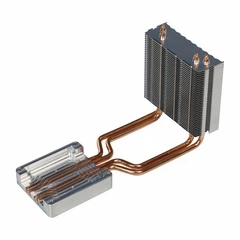
Hey there! I'm a supplier of cavity water cooling plates, and today I wanna chat about how the material of the cavity wall in a water cooling plate affects heat transfer.
First off, let's understand what a cavity water cooling plate is. It's a crucial component in many cooling systems, especially in high - performance applications like automotive and electronics. The basic idea is that water flows through the cavities in the plate, absorbing heat from the source and carrying it away.
So, why does the material of the cavity wall matter? Well, heat transfer is all about how easily heat can move from one place to another. Different materials have different abilities to conduct heat, and this directly impacts the efficiency of the water cooling plate.


Let's start with aluminum. Aluminum is one of the most commonly used materials for cavity water cooling plates. It's lightweight, which is a huge advantage, especially in automotive applications. You can check out our Automotive Controller Water Cooling Plate and Lightweight Automotive Controller Water Cooling Plate for some great examples of aluminum - based cooling plates.
Aluminum has a relatively high thermal conductivity. This means that heat can quickly pass through the cavity wall and into the water flowing inside. When you've got a high - powered component generating a lot of heat, like an automotive controller, you need a material that can transfer that heat efficiently. Aluminum does just that. It allows the water to absorb the heat rapidly, keeping the component at a safe operating temperature.
Another benefit of aluminum is its corrosion resistance. In a water - based cooling system, corrosion can be a big problem. If the cavity wall starts to corrode, it can reduce the plate's effectiveness and even lead to leaks. Aluminum forms a thin oxide layer on its surface, which acts as a protective barrier against corrosion. This makes it a reliable choice for long - term use.
Now, let's talk about copper. Copper is another excellent material for heat transfer. It has a much higher thermal conductivity than aluminum. In fact, it's one of the best conductors among common metals. When you need to transfer a large amount of heat in a short time, copper can be the way to go.
However, copper also has its drawbacks. It's heavier than aluminum, which can be a disadvantage in applications where weight is a concern, like in the automotive industry. Also, copper is more expensive. So, while it offers superior heat - transfer performance, the cost - to - benefit ratio might not be as favorable in some cases.
For copper - based cooling plates, the heat transfer is extremely efficient. The high thermal conductivity allows heat to spread quickly across the cavity wall and into the water. This is great for applications where you've got concentrated heat sources, like high - end electronics.
There are also composite materials that are being used more and more in cavity water cooling plates. These materials combine the best properties of different substances. For example, some composites might have a core of a high - strength material for structural support, with a layer of a highly conductive material on the surface for heat transfer.
Composite materials can be tailored to specific applications. You can adjust their properties to optimize heat transfer while also considering other factors like weight, cost, and durability. This flexibility makes them an attractive option for many industries.
Now, let's look at how the material affects the overall heat - transfer process in a bit more detail. The heat transfer in a water cooling plate occurs in three main steps: conduction, convection, and radiation.
Conduction is the transfer of heat through the cavity wall material. As I mentioned earlier, materials with high thermal conductivity, like copper and aluminum, are better at this. The heat from the source is conducted through the wall and into the water.
Convection is the movement of the heated water away from the cavity wall and the movement of cooler water towards it. The material of the cavity wall can influence this process. A smooth and well - designed wall made of a good - conducting material can help the water flow more smoothly, enhancing the convective heat transfer.
Radiation is the transfer of heat in the form of electromagnetic waves. While radiation is usually a minor factor in water cooling plates compared to conduction and convection, the material can still have an impact. Some materials might absorb or emit radiation more readily than others.
In the automotive industry, the choice of material for the cavity wall in a water cooling plate can have a big impact on the performance of the vehicle. For example, in an Automobile Car Drainage Raditor, the efficiency of the cooling system can affect the engine's performance and fuel economy. A well - designed cooling plate with the right material can help keep the engine at an optimal temperature, reducing wear and tear and improving overall efficiency.
In electronics, heat management is crucial. Components like processors can generate a lot of heat, and if not properly cooled, they can malfunction or even get damaged. A water cooling plate with a high - performance cavity wall material can ensure that these components stay cool and operate at their best.
So, when you're choosing a cavity water cooling plate, it's important to consider the material of the cavity wall. You need to balance factors like heat - transfer performance, weight, cost, and durability.
If you're in the market for a high - quality cavity water cooling plate, we've got a great range of products to suit your needs. Whether you need an aluminum - based plate for its lightweight and corrosion - resistant properties or a copper - based plate for maximum heat transfer, we can help.
We understand that every application is unique, and we're committed to providing you with the best solution. Our team of experts can work with you to choose the right material and design for your specific requirements.
If you're interested in learning more or want to start a purchase negotiation, don't hesitate to get in touch. We're here to answer your questions and help you find the perfect cooling plate for your project.
In conclusion, the material of the cavity wall in a water cooling plate plays a vital role in heat transfer. Different materials offer different advantages and disadvantages, and the choice depends on the specific application. By carefully considering these factors, you can ensure that your cooling system operates efficiently and effectively.
References
- Incropera, F. P., DeWitt, D. P., Bergman, T. L., & Lavine, A. S. (2007). Fundamentals of Heat and Mass Transfer. Wiley.
- Cengel, Y. A., & Ghajar, A. J. (2015). Heat and Mass Transfer: Fundamentals and Applications. McGraw - Hill.