


In the realm of lightweight car engineering, the cooling system plays a pivotal role in maintaining the optimal performance and longevity of the vehicle's engine. Among the various components of a cooling system, the expansion tank stands out as a crucial yet often overlooked element. As a leading supplier of Lightweight Car Cooling solutions, I am excited to delve into the intricacies of how the expansion tank functions within a lightweight car cooling system.
The Basics of a Lightweight Car Cooling System
Before we explore the role of the expansion tank, it's essential to understand the fundamentals of a lightweight car cooling system. The primary function of the cooling system is to regulate the engine's temperature, preventing it from overheating and causing damage. This is achieved through a series of components working in tandem, including the radiator, water pump, thermostat, and coolant.
The radiator acts as a heat exchanger, dissipating the heat generated by the engine into the surrounding air. The water pump circulates the coolant throughout the engine and radiator, ensuring a continuous flow of heat transfer. The thermostat regulates the coolant's temperature, opening and closing to maintain the engine at its optimal operating temperature. And the coolant, typically a mixture of water and antifreeze, absorbs the heat from the engine and transfers it to the radiator.
The Role of the Expansion Tank
Now that we have a basic understanding of the cooling system, let's turn our attention to the expansion tank. The expansion tank, also known as the coolant reservoir or overflow tank, serves several critical functions within the cooling system.
1. Accommodating Coolant Expansion
One of the primary functions of the expansion tank is to accommodate the expansion of the coolant as it heats up. As the engine operates, the coolant absorbs heat and expands in volume. Without an expansion tank, this expansion would cause excessive pressure within the cooling system, potentially leading to leaks, hose failures, or even radiator damage.
The expansion tank provides a safe and controlled space for the coolant to expand into. As the coolant heats up and expands, it flows into the expansion tank through a overflow tube. When the coolant cools down and contracts, it is drawn back into the cooling system from the expansion tank, ensuring a consistent level of coolant within the system.
2. Maintaining Coolant Level
Another important function of the expansion tank is to maintain the coolant level within the cooling system. As the coolant circulates through the engine and radiator, a small amount of it may evaporate or be lost due to minor leaks. The expansion tank acts as a reservoir, holding a reserve of coolant that can be drawn into the system as needed to maintain the proper coolant level.
Most expansion tanks are equipped with a sight glass or level indicator, allowing the driver to easily check the coolant level. If the coolant level is low, it can be topped up by adding coolant directly to the expansion tank. This simple maintenance task helps to prevent the engine from overheating due to a low coolant level.
3. Removing Air from the Cooling System
The expansion tank also plays a role in removing air from the cooling system. When the cooling system is first filled with coolant, air pockets may become trapped within the system. These air pockets can interfere with the coolant's flow and reduce the efficiency of the cooling system.
As the coolant circulates through the system, the air pockets rise to the top and are forced into the expansion tank. The expansion tank provides a large surface area for the air to escape, allowing it to be vented out through a vent valve or cap. This process helps to ensure that the cooling system is filled with coolant and free of air pockets, maximizing its efficiency and performance.
Design and Construction of Expansion Tanks
Expansion tanks are typically made of plastic or metal, depending on the vehicle's design and requirements. Plastic expansion tanks are lightweight, corrosion-resistant, and cost-effective, making them a popular choice for most modern vehicles. Metal expansion tanks, on the other hand, are more durable and can withstand higher pressures, making them suitable for high-performance or heavy-duty applications.
The design of the expansion tank is also important for its proper function. Most expansion tanks are designed with a baffle or separator to prevent the coolant from sloshing around and creating air pockets. The tank may also be equipped with a pressure relief valve or cap to prevent excessive pressure from building up within the system.
Importance of Regular Maintenance
Like all components of the cooling system, the expansion tank requires regular maintenance to ensure its proper function. Over time, the coolant may become contaminated with dirt, debris, or rust, which can clog the expansion tank and reduce its efficiency. The expansion tank may also develop cracks or leaks, which can lead to coolant loss and potential engine damage.
To keep the expansion tank in good condition, it is recommended to have the coolant system flushed and replaced at regular intervals, as specified by the vehicle manufacturer. This helps to remove any contaminants from the system and ensure that the coolant is clean and fresh. It is also important to inspect the expansion tank for any signs of damage or leaks and to replace it if necessary.
Related Products from Our Company
As a leading supplier of Lightweight Car Cooling solutions, we offer a wide range of products to meet the needs of our customers. In addition to expansion tanks, we also provide Cavity-type Energy Storage Battery Water Cooling Plate, Aluminum Heat Pipe Communication Module Heatsink, and Lightweight Automotive Controller Water Cooling Plate.
Our Cavity-type Energy Storage Battery Water Cooling Plate is designed to provide efficient cooling for energy storage batteries in electric vehicles. It features a unique cavity design that maximizes the surface area for heat transfer, ensuring optimal cooling performance.


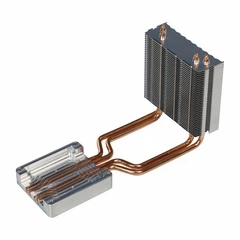
Our Aluminum Heat Pipe Communication Module Heatsink is a high-performance heatsink that uses heat pipes to transfer heat away from the communication module. It is lightweight, compact, and highly efficient, making it ideal for use in automotive communication systems.
Our Lightweight Automotive Controller Water Cooling Plate is designed to provide efficient cooling for automotive controllers. It is made of lightweight aluminum and features a unique water cooling design that ensures optimal cooling performance while minimizing weight.
Conclusion
In conclusion, the expansion tank is a critical component of a lightweight car cooling system. It plays a vital role in accommodating coolant expansion, maintaining coolant level, and removing air from the system. By understanding the function of the expansion tank and performing regular maintenance, you can help to ensure the proper operation of your vehicle's cooling system and prevent costly repairs.
If you are in the market for high-quality Lightweight Car Cooling solutions, including expansion tanks, Cavity-type Energy Storage Battery Water Cooling Plate, Aluminum Heat Pipe Communication Module Heatsink, and Lightweight Automotive Controller Water Cooling Plate, please feel free to contact us for more information. Our team of experts is always ready to assist you with your cooling system needs.
References
- Automotive Cooling Systems: Principles and Practice, by John Tomczyk
- The Automotive Handbook, by Bosch
- Modern Automotive Technology, by James D. Halderman