


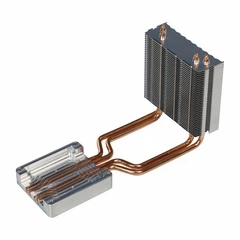
As a supplier of Circular Base LED Heat Sinks, I've spent a significant amount of time delving into the intricacies of heat transfer and how various design parameters can influence the performance of our products. One such crucial parameter is the base thickness of the heat sink. In this blog post, I'll explore how the base thickness affects the heat transfer of a circular base LED heat sink, drawing on both theoretical knowledge and practical experience.
Understanding Heat Transfer in LED Heat Sinks
Before we dive into the impact of base thickness, it's important to have a basic understanding of how heat transfer occurs in LED heat sinks. LEDs generate heat during operation, and if this heat is not effectively dissipated, it can lead to a decrease in luminous efficacy, a reduction in the lifespan of the LED, and even potential damage to the device. Heat sinks are designed to absorb this heat from the LED and transfer it to the surrounding environment through conduction, convection, and radiation.
Conduction is the transfer of heat through a solid material, such as the base and fins of the heat sink. Convection involves the transfer of heat through the movement of a fluid, typically air, over the surface of the heat sink. Radiation is the emission of electromagnetic waves, which carry heat energy away from the heat sink.
The Role of the Base in Heat Transfer
The base of a circular base LED heat sink serves as the interface between the LED and the rest of the heat sink. It plays a critical role in conducting heat from the LED to the fins, where it can be dissipated into the surrounding environment. A good base material should have high thermal conductivity to ensure efficient heat transfer. Common materials used for heat sink bases include aluminum and copper, both of which have relatively high thermal conductivities.
The base thickness also affects the heat transfer performance of the heat sink. A thicker base can provide more mass to absorb and store heat, which can help to reduce the temperature gradient between the LED and the base. This can be particularly beneficial in applications where the LED generates a large amount of heat or where the heat sink is operating under high thermal loads.
How Base Thickness Affects Heat Transfer
Conduction
As mentioned earlier, conduction is the primary mode of heat transfer within the base of the heat sink. The rate of heat conduction is governed by Fourier's Law, which states that the heat flux (q) is proportional to the temperature gradient (dT/dx) and the thermal conductivity (k) of the material, and inversely proportional to the thickness (L) of the material:
q = -k * (dT/dx)
In the context of a heat sink base, a thicker base will have a larger cross-sectional area for heat conduction, which can increase the overall heat transfer rate. However, a thicker base also means a longer path for heat to travel, which can increase the thermal resistance and reduce the rate of heat transfer. Therefore, there is an optimal base thickness that maximizes the heat transfer rate.
Thermal Resistance
Thermal resistance is a measure of how well a material resists the flow of heat. It is defined as the temperature difference (ΔT) across a material divided by the heat flux (q):
R = ΔT / q
The thermal resistance of the base can be calculated using the following formula:
R_base = L / (k * A)
where L is the thickness of the base, k is the thermal conductivity of the base material, and A is the cross-sectional area of the base.
As the base thickness increases, the thermal resistance of the base also increases. This means that it becomes more difficult for heat to flow through the base, which can lead to a higher temperature at the LED junction. However, a thicker base can also provide more surface area for heat transfer to the fins, which can help to offset the increase in thermal resistance.
Heat Spreading
Another important aspect of heat transfer in a heat sink base is heat spreading. When heat is applied to a small area of the base, such as the contact area with the LED, it needs to spread out over a larger area before it can be effectively dissipated by the fins. A thicker base can provide better heat spreading, as it has more mass and a larger cross-sectional area for heat to spread.
Heat spreading is particularly important in applications where the LED has a high power density or where the heat sink has a small contact area with the LED. In these cases, a thicker base can help to reduce the temperature gradient across the base and improve the overall heat transfer performance of the heat sink.
Practical Considerations
In practice, the optimal base thickness for a circular base LED heat sink depends on a variety of factors, including the power output of the LED, the thermal conductivity of the base material, the design of the fins, and the operating conditions of the heat sink.
For low-power LEDs, a thinner base may be sufficient to dissipate the heat effectively. A thinner base can also reduce the cost and weight of the heat sink, which can be beneficial in applications where space and weight are limited.
For high-power LEDs, a thicker base may be necessary to ensure efficient heat transfer. A thicker base can provide more mass to absorb and store heat, which can help to reduce the temperature gradient between the LED and the base. However, a thicker base also means a higher cost and a heavier heat sink, so it's important to balance the benefits of a thicker base with the additional cost and weight.
Related Products
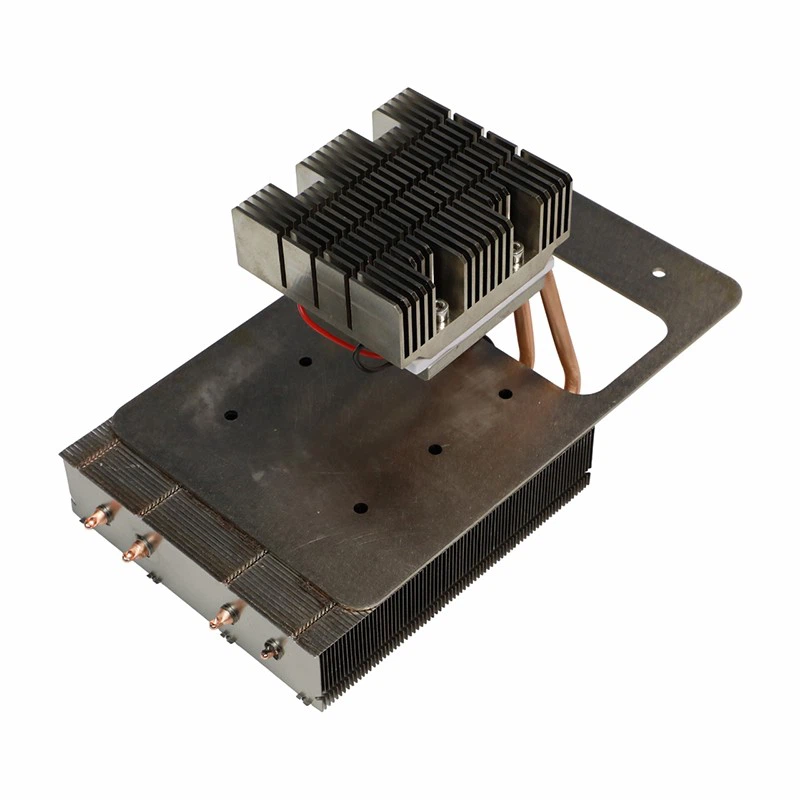
If you're interested in exploring other types of heat sinks, we also offer a range of Semiconductor Cooling Module Heatsink, CPU Aluminum Heat Pipe Heatsink, and LED Lighting Aluminum Heat Pipe Heatsink. These products are designed to provide efficient heat transfer solutions for a variety of applications.
Conclusion
In conclusion, the base thickness of a circular base LED heat sink plays a crucial role in determining its heat transfer performance. A thicker base can provide more mass for heat absorption, better heat spreading, and a larger cross-sectional area for conduction. However, a thicker base also means a longer path for heat to travel, which can increase the thermal resistance and reduce the rate of heat transfer. Therefore, there is an optimal base thickness that maximizes the heat transfer rate.
As a supplier of Circular Base LED Heat Sinks, we understand the importance of selecting the right base thickness for your specific application. We offer a range of heat sink products with different base thicknesses to meet your needs. If you have any questions or would like to discuss your heat sink requirements, please don't hesitate to contact us. We're here to help you find the best heat transfer solution for your LED lighting applications.

References
- Incropera, F. P., & DeWitt, D. P. (2002). Fundamentals of Heat and Mass Transfer. Wiley.
- Holman, J. P. (2010). Heat Transfer. McGraw-Hill.
- Kraus, A. D., & Bar-Cohen, A. (1995). Design and Analysis of Heat Sinks. Wiley.