


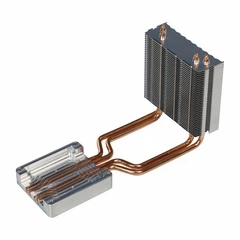
Yo, folks! As a supplier of cavity water cooling plates, I've been getting a ton of questions lately about whether these bad boys can be used in nuclear power equipment cooling systems. So, I thought I'd sit down and break it all down for you.
First off, let's talk a bit about what a cavity water cooling plate actually is. It's a pretty nifty piece of tech that uses water to transfer heat away from a hot component. The plate has small cavities or channels inside where the water flows. As the water moves through these channels, it absorbs the heat from the component and then carries it away. This way, the component stays cool and can keep working properly.
Now, nuclear power equipment generates a crazy amount of heat. We're talking about the heat that comes from nuclear fission reactions, which are super intense. The cooling system in a nuclear power plant is crucial because it helps to maintain the temperature of the reactor and other important parts. If the temperature gets too high, it can lead to all sorts of problems, like equipment failure or even a nuclear accident. So, the cooling system has to be top - notch.
Can our cavity water cooling plates cut it in this high - stakes environment? Well, there are a few things to consider.
Advantages of Using Cavity Water Cooling Plates in Nuclear Power Equipment Cooling Systems
1. High Heat Transfer Efficiency
One of the biggest pros of cavity water cooling plates is their excellent heat transfer efficiency. The design with the small channels allows for a large surface area for heat exchange. Water is a great coolant because it has a high specific heat capacity, which means it can absorb a lot of heat without a significant increase in temperature. In a nuclear power plant, where heat loads are extremely high, this efficient heat transfer can be a real game - changer.
2. Compact Design
Nuclear power plants are complex facilities with limited space. Cavity water cooling plates can be designed to be relatively compact. This means they can fit into tight spaces more easily compared to some other cooling solutions. For example, their flat and thin design can be integrated into the equipment in a more space - saving way, which is a big plus in a plant where space is at a premium.
3. Customizability
We can customize the cavity water cooling plates according to the specific needs of the nuclear power equipment. Different parts of a nuclear power plant may have different cooling requirements in terms of heat load, size, and shape. We can adjust the design of the channels, the size of the plate, and the flow rate of the water to meet these diverse needs. This flexibility gives us an edge over some off - the - shelf cooling options.
Challenges and Concerns
1. Radiation Resistance
Nuclear power plants are full of radiation. The cooling plates need to be able to withstand this radiation without degrading. The materials used in the plates have to be carefully selected to ensure radiation resistance. For example, some metals may become brittle or change their properties over time when exposed to high levels of radiation. We need to conduct thorough testing to make sure our plates can handle the radiation environment.


2. Safety and Reliability
In a nuclear power plant, safety is the number one priority. The cooling system cannot afford to fail. Our cavity water cooling plates need to be designed and manufactured to the highest safety standards. This includes having redundant systems in case of a failure, and rigorous quality control during the production process. Any small leak or malfunction in the cooling plate could potentially lead to a major safety issue.
3. Compatibility with Other Systems
The cooling plates need to be compatible with the overall cooling system in the nuclear power plant. This includes the water treatment system, the pumping system, and the monitoring system. They have to work together seamlessly to ensure the efficient and safe operation of the entire facility.
Real - World Applications and Similar Technologies
You might be wondering if there are any real - world examples of similar technologies being used in high - heat applications. Well, in the automotive industry, we have some relevant products. For instance, the Automobile Car Drainage Raditor and the Automotive Controller Water Cooling Plate use water - based cooling solutions to manage the heat generated by the engine and other components. While the heat levels in a car are nowhere near as high as in a nuclear power plant, the basic principle of using water to transfer heat is the same.
Another interesting example is the Aluminum Heat Pipe Communication Module Heatsink. It's used in communication equipment to dissipate heat. Heat pipes are a different technology, but they also rely on the transfer of heat to keep the components cool. These examples show that water - based and heat - transfer technologies can be adapted to different applications, and there's definitely potential to apply cavity water cooling plates in nuclear power plants.
Our Approach as a Supplier
As a cavity water cooling plate supplier, we're taking a multi - pronged approach to address the challenges and make our products suitable for nuclear power equipment cooling systems.
First, we're working on developing radiation - resistant materials. We're collaborating with research institutions and materials scientists to find the best materials that can stand up to the harsh radiation environment in a nuclear power plant.
Second, we're investing heavily in quality control and safety testing. Our production facilities are equipped with state - of - the - art testing equipment, and we have a team of experts who conduct thorough inspections at every stage of the manufacturing process. We're also running simulations and real - life tests to ensure the reliability of our products.
Finally, we're focusing on building strong relationships with nuclear power plant operators and engineers. By working closely with them, we can better understand their needs and design our products to fit seamlessly into their existing systems.
Conclusion
So, can a cavity water cooling plate be used in a nuclear power equipment cooling system? The answer is, it's possible, but there are a lot of hurdles to overcome. The technology has some great advantages in terms of heat transfer efficiency, compact design, and customizability. However, we need to address the issues of radiation resistance, safety, and compatibility.
If you're in the nuclear power industry or know someone who is, and you're interested in learning more about our cavity water cooling plates, we'd love to hear from you. We're ready to have in - depth discussions about how our products can be adapted to your specific needs and contribute to the safe and efficient operation of your nuclear power plant. Feel free to reach out for a consultation and let's start the conversation about a potential procurement.
References
- Thyagaraja, A. (2007). Nuclear Power Plant Systems. Elsevier.
- Incropera, F. P., & DeWitt, D. P. (2001). Fundamentals of Heat and Mass Transfer. Wiley.