


Hey there! As a supplier of cavity water cooling plates, I often get asked if there are any standards for these nifty pieces of tech. Well, let's dive right in and explore this topic.
First off, what the heck is a cavity water cooling plate? In simple terms, it's a device used to cool down various components by circulating water through its cavities. These plates are super useful in a bunch of industries, like electronics, automotive, and even some high - end home appliances.
Industry - wide Standards
When it comes to standards, there isn't a one - size - fits - all answer. Different industries have their own sets of requirements and guidelines.
In the electronics industry, for example, the cooling plates need to meet certain thermal performance standards. The goal is to efficiently transfer heat away from sensitive electronic components like processors and power modules. There are standards regarding the maximum temperature rise that these components can tolerate. If a cavity water cooling plate can't keep the temperature within the specified range, it's a no - go.
Thermal resistance is another important factor. It measures how well the cooling plate can conduct heat. Industry standards often set limits on the maximum allowable thermal resistance. This ensures that the cooling plate can effectively dissipate heat and maintain the optimal operating temperature of the electronics.


In the automotive industry, things get a bit more complex. Automotive components operate in a harsh environment with varying temperatures, vibrations, and exposure to contaminants. Cavity water cooling plates used in cars, like the Automotive Controller Water Cooling Plate, need to meet strict durability and reliability standards.
There are standards for pressure resistance. The cooling plates must be able to withstand the pressure of the circulating water without leaking. This is crucial because a leak can not only damage the cooling system but also other components in the vehicle.
Vibration resistance is also key. Cars are constantly on the move, and the cooling plates need to stay intact and functional even when subjected to vibrations. Automotive manufacturers often conduct extensive vibration tests to ensure that the cooling plates meet their standards.
Material and Manufacturing Standards
The materials used in cavity water cooling plates also have standards. Most commonly, aluminum is used due to its excellent thermal conductivity, light weight, and corrosion resistance. When it comes to aluminum, there are standards for its purity, alloy composition, and surface finish.
A high - purity aluminum is often preferred as it has better thermal properties. The alloy composition can also affect the strength and corrosion resistance of the cooling plate. For example, some aluminum alloys are specifically designed to be more resistant to corrosion in automotive applications, like the Automobile Car Drainage Raditor.
The manufacturing process of cavity water cooling plates is also regulated. Precision machining is often required to create the cavities and channels inside the plate. There are standards for the dimensional accuracy of these features. Any deviation from the specified dimensions can affect the flow of water and the overall cooling performance.
Welding and brazing, which are commonly used to assemble the cooling plates, also have their own standards. The joints need to be strong and leak - proof. There are standards for the quality of the welds, including factors like weld penetration, bead shape, and the absence of defects.
Our Approach as a Supplier
At our company, we take these standards very seriously. We have a team of experts who are constantly researching and staying up - to - date with the latest industry requirements. When we design and manufacture cavity water cooling plates, we start by understanding the specific needs of our customers.
For example, if a customer in the electronics industry needs a cooling plate for a high - power processor, we'll focus on optimizing the thermal performance. We'll use advanced simulation tools to model the heat transfer and flow of water inside the plate. This allows us to fine - tune the design and ensure that it meets or exceeds the industry standards for thermal resistance and temperature control.
In the automotive sector, we conduct rigorous testing on our cooling plates. We simulate the harsh conditions that the plates will encounter in real - world use. This includes pressure tests, vibration tests, and corrosion tests. We make sure that our Automotive Controller Water Cooling Plate can withstand the toughest automotive environments.
We also pay close attention to the materials we use. We source high - quality aluminum from trusted suppliers and conduct our own quality checks. Our manufacturing processes are highly controlled to ensure that every cooling plate meets the strict dimensional and welding standards.
Customization and Standards
One of the great things about cavity water cooling plates is that they can be customized. Different applications have different requirements, and we're able to tailor our products accordingly. But even with customization, we always adhere to the relevant standards.
For instance, if a customer needs a cooling plate with a unique shape or size, we'll work closely with them to design a solution that meets their specific needs while still complying with the industry standards for thermal performance, pressure resistance, etc.
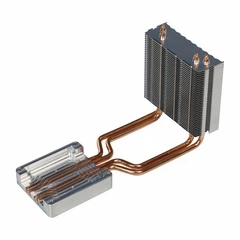
We also offer a range of standard products, like the Aluminum Heat Pipe Communication Module Heatsink, which are designed to meet the general requirements of many applications. These products have been tested and certified to meet the industry standards, giving our customers peace of mind.
Why Standards Matter
Standards are not just a bunch of rules; they are essential for the proper functioning of the products. When a cavity water cooling plate meets the standards, it means that it's reliable, efficient, and safe.
For our customers, using cooling plates that meet the standards reduces the risk of component failure. In the electronics industry, a failed cooling plate can lead to overheating of the components, which can cause data loss, system crashes, or even permanent damage. In the automotive industry, a faulty cooling plate can lead to engine overheating or other serious mechanical problems.
Standards also promote innovation. As the industry evolves, the standards are updated to reflect the latest technologies and requirements. This encourages us as suppliers to develop new and improved cooling plate designs and manufacturing processes.
Contact Us for Your Cooling Needs
If you're in the market for high - quality cavity water cooling plates, look no further. We're here to provide you with products that meet the highest industry standards. Whether you need a standard product or a customized solution, we have the expertise and resources to deliver.
Get in touch with us to start a conversation about your cooling requirements. We're ready to work with you to find the perfect cavity water cooling plate for your application.
References
- "Thermal Management Handbook for Electronic Systems", John Wiley & Sons
- "Automotive Cooling System Design and Analysis", SAE International